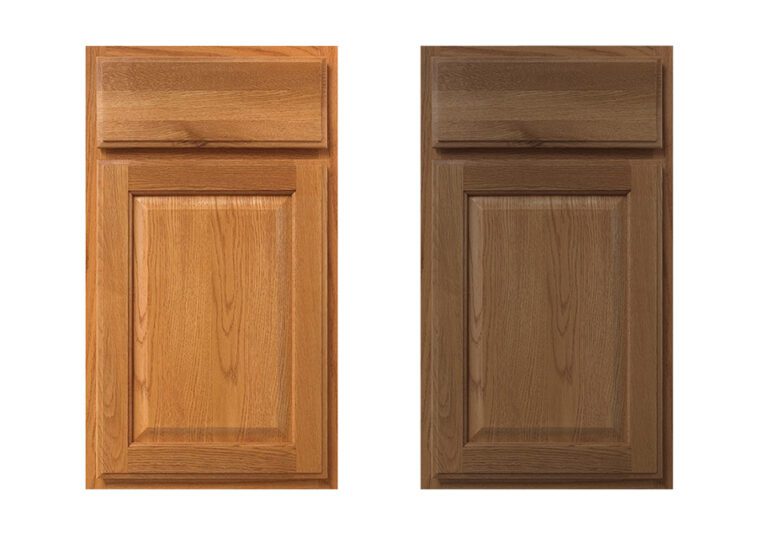
Have you ever walked into a kitchen that’s undeniably nice: solid wood cabinets, a well-chosen stain, quality hardware. Yet somehow it doesn’t feel quite right?
Nothing is obviously wrong, and still, the space lacks the calm, polish, or warmth you were hoping for.
When that happens, the issue is rarely budget, craftsmanship, or even color.
Most of the time, it comes down to a quieter detail (one that almost never makes it into showroom conversations or cabinet quotes).
It’s not something homeowners are expected to know to ask about. But once you do, it changes how you see kitchens entirely.
The One Question (Clear Reveal)
So what should you ask before you approve your cabinets?
What wood cut will be used for the cabinet fronts?
Not the species.
Not the stain.
The cut.
This single detail determines how the wood’s grain appears across the surface, whether it feels lively and expressive or calm and restrained.
And because grain is what your eye reads first, it quietly sets the mood of the entire kitchen.
The same white oak can feel rustic, architectural, or unmistakably modern depending on how it’s cut.
Once you understand that, the question stops feeling technical and starts feeling essential.
Why This Question Is Almost Never Mentioned
If this question feels oddly absent from cabinet conversations, there’s a reason for that.
Most cabinet makers work from a place of availability and efficiency, relying on standard cuts that are easy to source and produce consistently.
There’s also a common assumption (often a well-intentioned one) that clients care most about wood species, stain color, and price.
Grain pattern, by comparison, is seen as a technical detail rather than a design driver.
But from a design perspective, grain pattern isn’t just a technical outcome; it’s a visual language. As many designers will tell you, it’s the grain, not the stain, that sets the tone of a space.
When that distinction isn’t discussed, kitchens can end up beautifully crafted yet stylistically off-key, missing the quiet cohesion that makes a design feel intentional.
Why Wood Cut Matters More Than You Think
Wood cut matters because our eyes read wood before we ever register color or finish.
Long before you notice the stain or the hardware, your brain is responding to the grain – its rhythm, direction, and consistency.
Grain with a lot of variation introduces movement. It feels lively, casual, and expressive.
Straighter, more uniform grain does the opposite, creating a sense of calm and visual quiet.
Direction plays a role, too. Strong vertical or linear grain brings energy and order, while irregular patterns feel softer and more relaxed.
Neither is better. They simply communicate different moods.
Consistency is where style comes into focus.
Even, predictable grain reads as modern and restrained; varied grain leans traditional and familiar.
And the important thing to remember is this: it’s often the same exact wood species producing these effects.
Change the cut, and you change the feeling of the kitchen entirely without changing the wood at all.
The Three Most Common Wood Cuts You’ll Be Offered
Once you start asking about wood cut, you’ll usually hear the same three options come up (and one “bonus” milling method).
They all come from the same log, but they read completely differently on a cabinet door – which is why they can quietly steer your kitchen toward cozy, classic, or clean-lined.
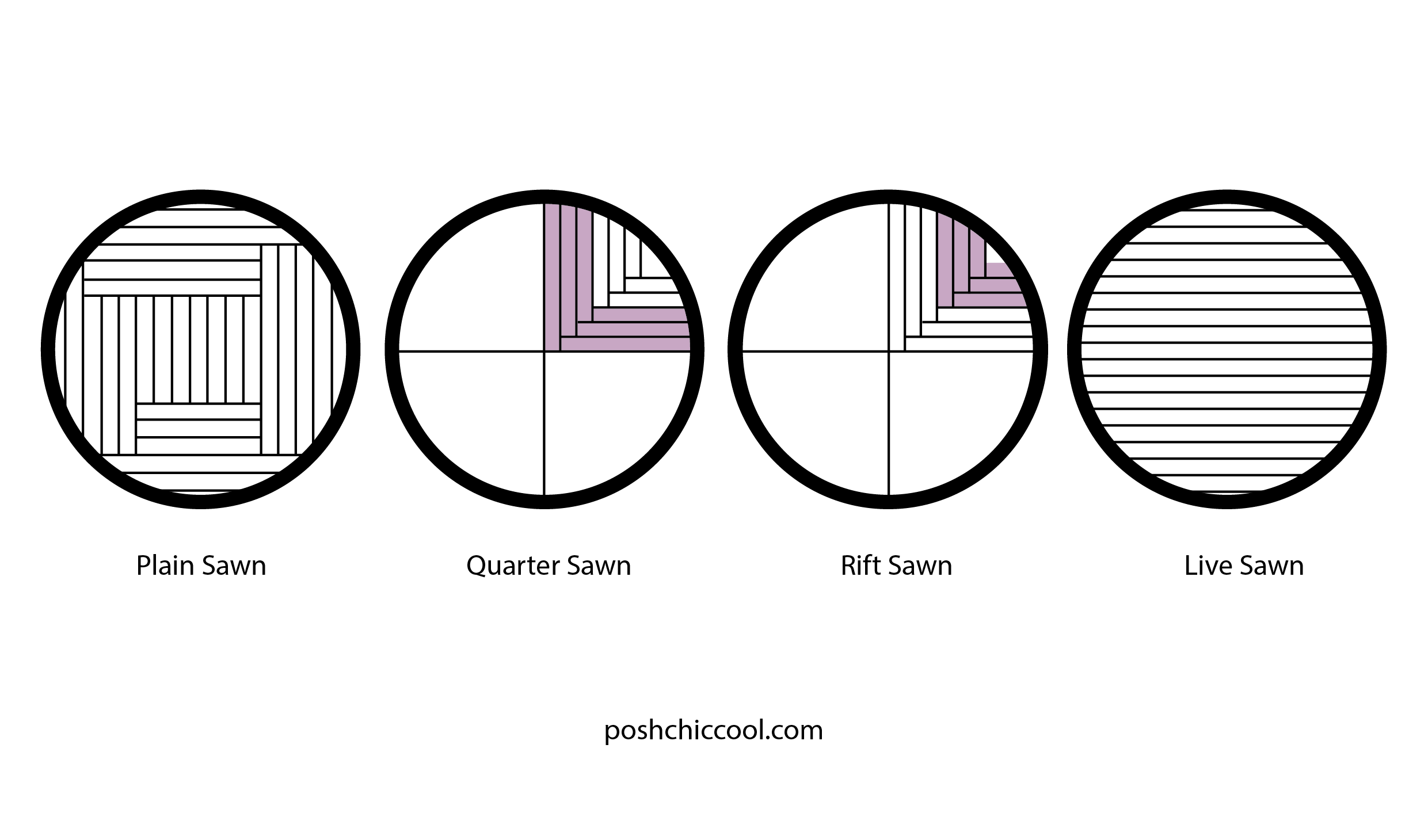
Plain Sawn (Flat Sawn)
Bold, cathedral grain
Plain sawn is the most common cut, and typically the most budget-friendly. Because the grain has a lot of movement and variation, it brings warmth and personality right away.
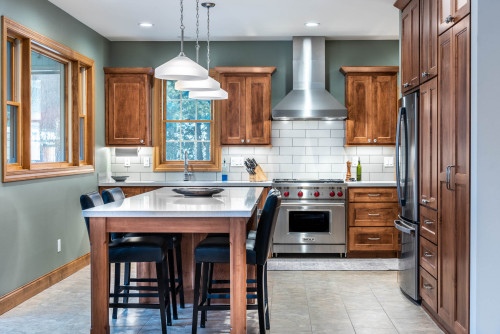
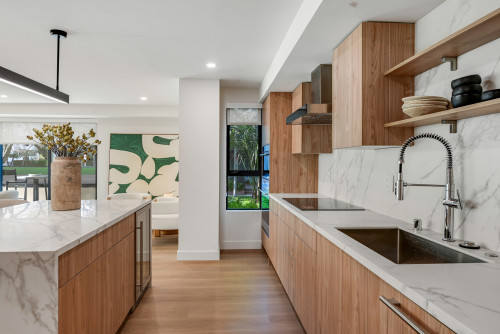
Good to know: lots of visual “life” (great if you want character, not great if you want calm)
Feels: warm, expressive, casual
Best for: farmhouse, rustic modern, classic coastal
Quarter Sawn
Straighter grain with visible fleck
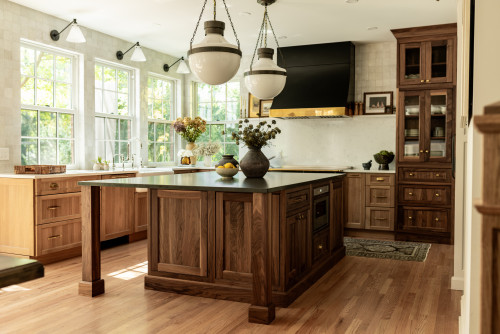
Quarter sawn oak looks more structured and refined, but it has that signature shimmering fleck (especially in white oak) that reads as craftsmanship rather than clutter.
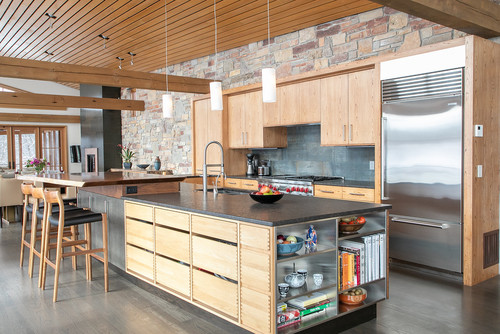
- Feels: crafted, architectural, grounded
- Common in: mission, Spanish, transitional interiors
- Good to know: often chosen for stability and longevity. Plus it gives you character without chaos
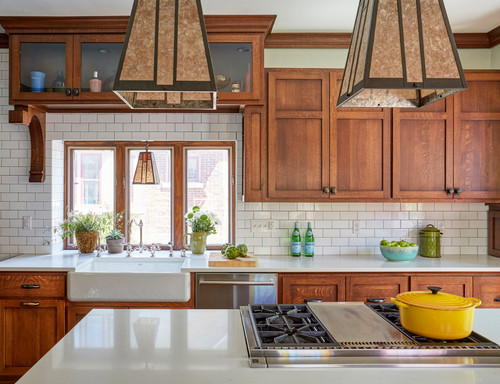
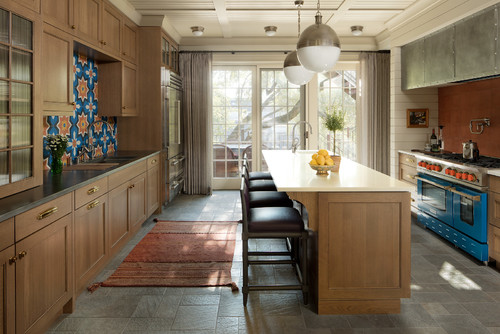
Rift Sawn
Clean, linear, consistent grain
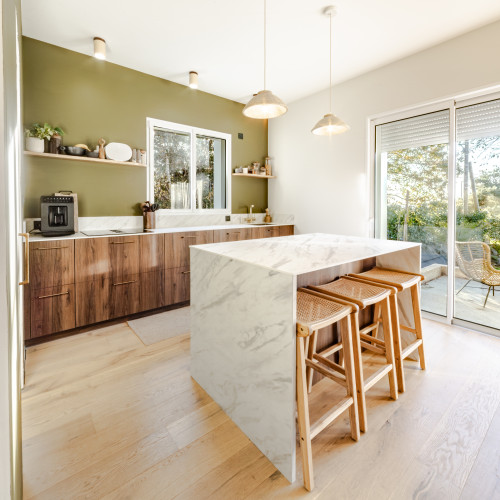
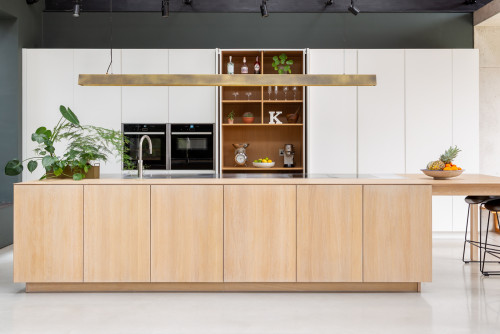
Rift sawn is the rarest look you’ll see quoted by default, but it’s the one designers reach for when the goal is quiet luxury. The grain is straight, even, and visually disciplined.
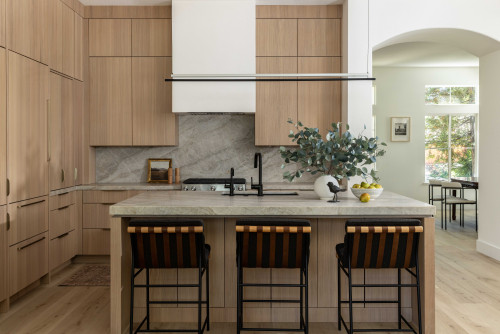
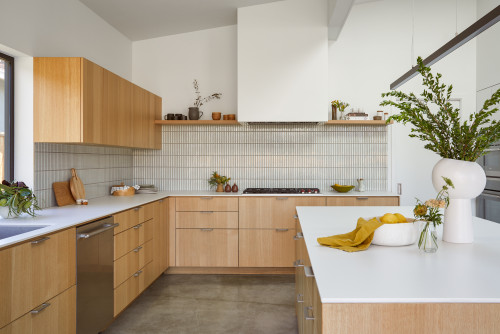
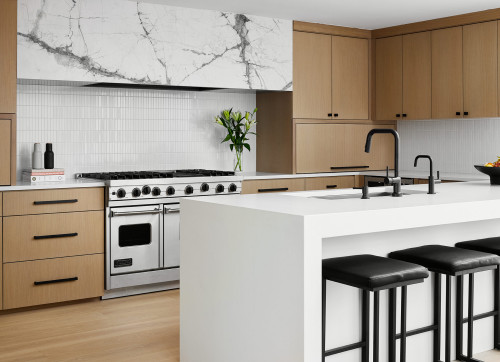
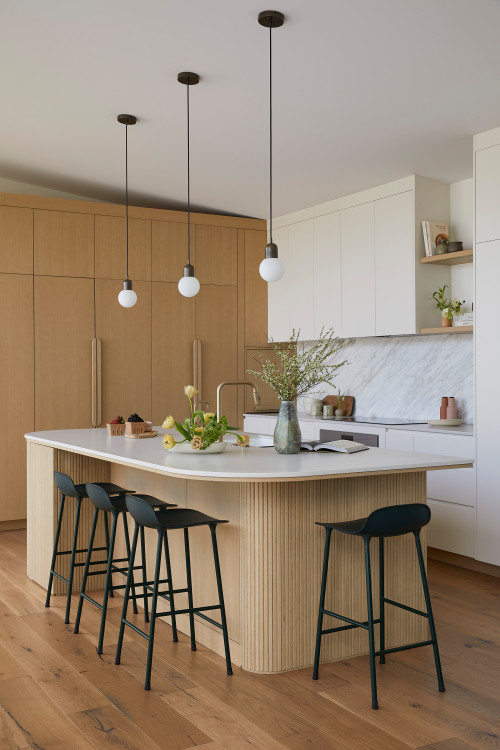
- Feels: calm, precise, timeless
- Ideal for: modern, Japandi, Scandinavian, mid-century-inspired kitchens
- Good to know: typically the priciest, because it yields less usable lumber. What you’re paying for is consistency
Live Sawn Milling (Bonus)
Most efficient; a blended mix of all cuts
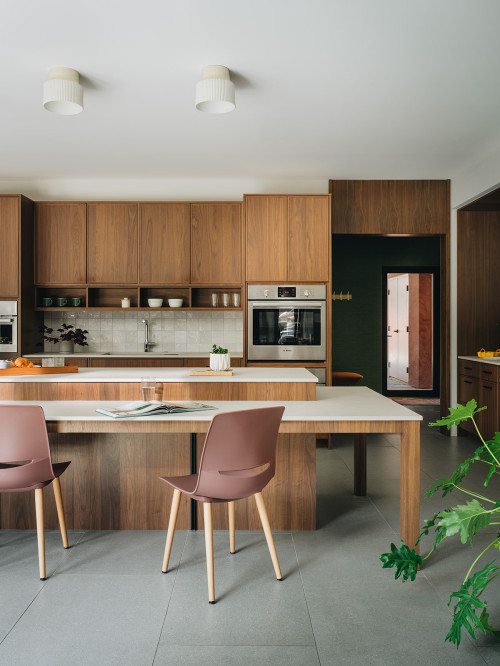
Live sawn boards are cut straight through the log without re-orienting it, so you get a mix of grain angles in one batch: cathedrals, straighter sections, and everything in between.
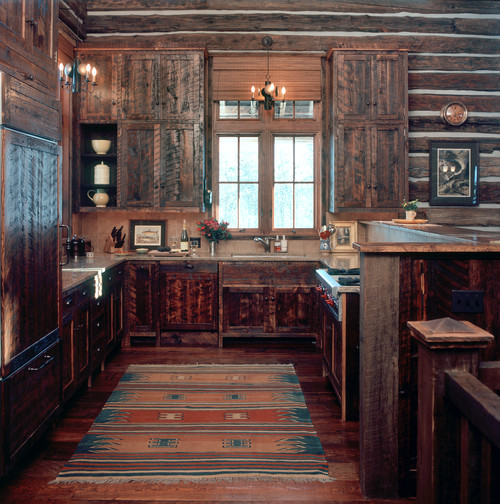
- Feels: organic, varied, natural
- Best for: relaxed, character-forward kitchens where variation is a feature
- Good to know: efficient and beautiful, but not the choice when you want ultra-uniform grain
How the Wrong Cut Can Undermine Your Intended Style
This is usually where things start to feel frustrating – not because the materials are bad, but because they’re working against each other.
Take a modern kitchen, for example. Pair clean lines and minimal detailing with heavy cathedral grain, and the space can feel visually noisy, even when the palette is restrained. Nothing is technically wrong. It just feels unsettled.
The same thing happens in subtler ways. Minimal cabinetry paired with highly expressive grain creates tension: the architecture asks for calm, while the wood insists on being the focal point. Your eye doesn’t know where to rest.
And on the other end of the spectrum, a traditional layout finished in ultra-clean, uniform grain can read colder than intended. Without variation or movement, the kitchen loses some of the warmth and familiarity that traditional spaces rely on.
These mismatches are easy to miss during the planning stage, especially when you’re looking at small samples or showroom doors in isolation.
But once everything is installed, the effect is hard to ignore. The kitchen is well made but it just doesn’t feel like you imagined.
What to Ask After You Get the Answer
Once your cabinet maker tells you which cut they’re planning to use, the goal isn’t to challenge the choice: it’s simply to understand your options.
A few well-phrased follow-up questions can make all the difference.
You can use this script:
- “Is that the standard option, or are other cuts available?”
This opens the door to alternatives without implying anything is wrong. - “Can I see a sample of the actual cut, not just the stain color?”
Color samples are helpful, but grain pattern is what you’ll live with every day. - “Will the grain be matched across doors, or will it be more random?”
This determines whether your cabinets feel tailored and intentional, or relaxed and varied.
None of these questions are unusual, and none of them signal indecision. They simply show that you’re paying attention to how the kitchen will feel, not just how it will function.
It’s a small conversation to have, but one that often separates a kitchen that looks fine from one that feels right.
Cost, Availability & Expectations (Quick Reality Check)
Once wood cut enters the conversation, it’s helpful to understand how it affects pricing and lead times, so there are no surprises later.
Rift sawn wood is the rarest option you’ll encounter. Because it yields less usable lumber, it typically comes with a higher price tag and longer lead times.
That doesn’t make it better across the board, it simply makes it more specific.
Plain sawn, on the other hand, is the most economical and readily available. It’s the default for a reason: efficient to produce, easy to source, and full of character.
Quarter sawn sits comfortably in between. It offers a more controlled grain with visible personality, often at a moderate increase in cost and timeline.
The key thing to remember is that this isn’t about upgrading for the sake of it.
It’s about choosing the cut that supports the look and feel you’re aiming for, so the kitchen you end up with matches the one you imagined.
Final Takeaway
Great kitchens aren’t just well built. They’re well decided. The difference often comes down to a few informed choices made early, before anything is ordered or approved.
Asking a single, thoughtful question about wood cut can spare you years of that vague sense that something isn’t quite right.
Not because the kitchen is wrong, but because it could have been more aligned with how you live and what you love.
Once you start seeing wood this way, it becomes part of how you read a space. And from that point on, your decisions feel clearer, calmer, and far more intentional.
You might also like:
Best Cabinet Color Pairings with Taj Mahal Quartzite Countertops
8 strategic ways to design kitchen with tile countertops (that don’t look dated and disgusting)