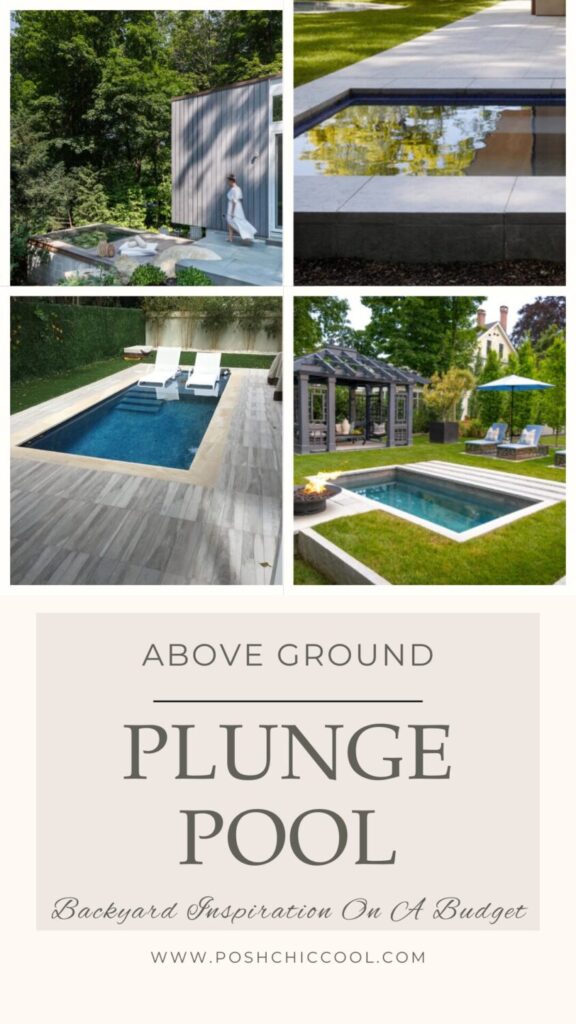
The traditional swimming pool is facing an identity crisis.
For decades, the “bigger is better” philosophy dominated residential design, often resulting in massive, high-maintenance footprints that sat dormant for eight months of the year—taking up precious square footage that could have been used for gardens, outdoor kitchens, or flexible lounging zones.
As architects and designers, we’ve all faced the challenge of trying to fit a luxury water feature into an urban plot where every centimeter counts.
However, plunge pools are redefining the landscape.
The rise of the plunge pool is all about the idea of balance between luxury and year-round functionality.
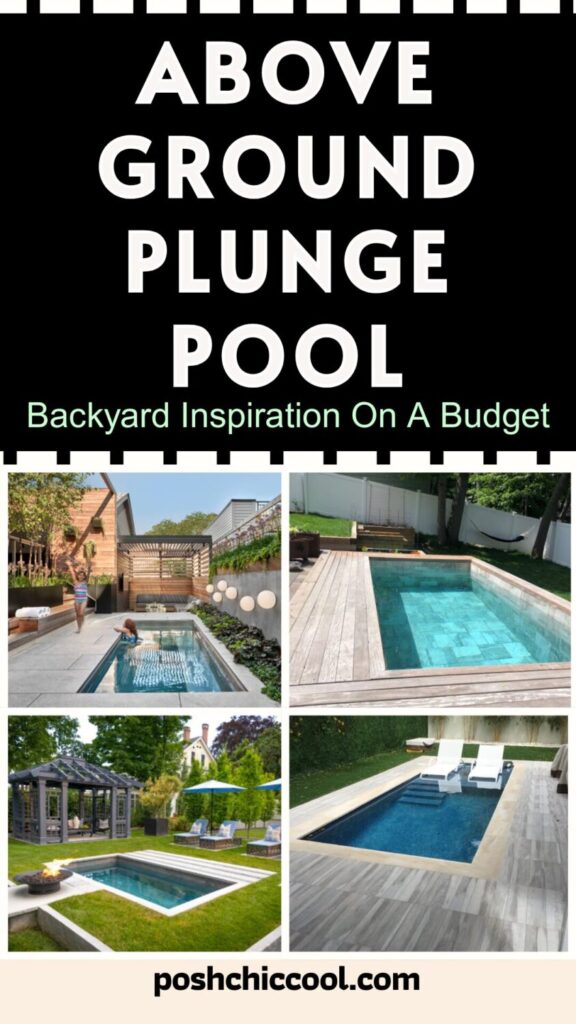
Instead of an Olympic-sized lap pool that drains resources, the modern solution—typified by innovators like Soake Pools—offers a “rug-sized” oasis that works harder for the homeowner.
Posh Chic Cool is a participant in the Amazon Services LLC Associates Program, an affiliate advertising program designed to provide a means for sites to earn advertising fees by advertising and linking to Amazon.com. As an Amazon Associate, I earn from qualifying purchases at no extra cost to you. Disclaimer, Privacy Policy and Terms and Conditions
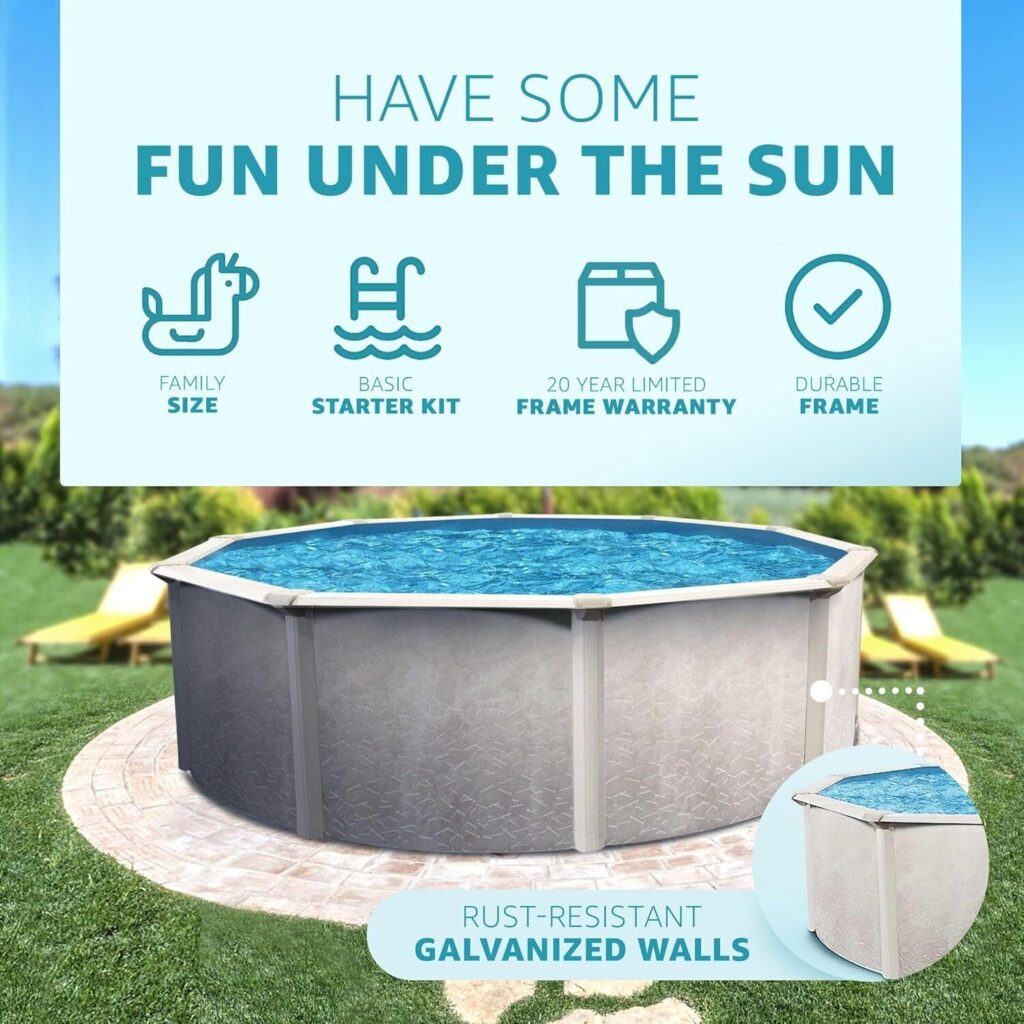
Another alternative is to buy Fiberglass Pool Shells for Inground Pools Fast Installation, that are Saltwater & Weather Resistant in a Rectangular 14ft x 7.4ft x 4.6ft shape.
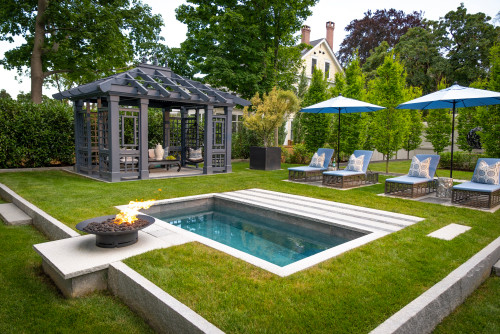
Imagine a feature the size of your favorite living room rug that serves as a crisp, refreshing plunge during a 35°C afternoon, and with a quick adjustment of a high-efficiency heater, transforms into a deep, tiled hot tub by sunset.
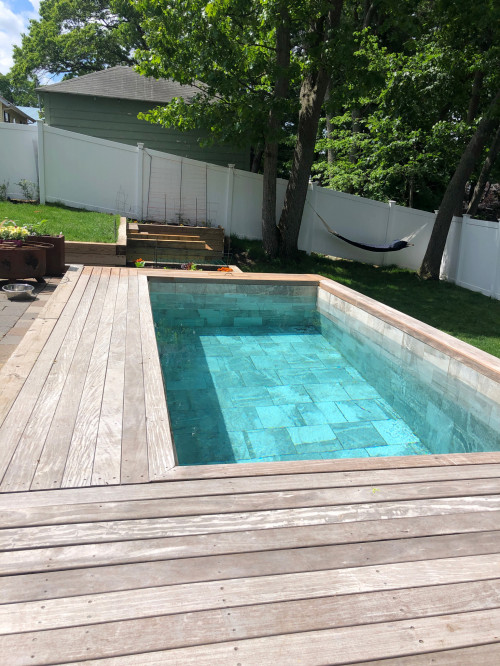
If you are thinking: oh, this is just a “kiddie pool” with a promotion, don’t be quick to judge: it’s a pre-cast, fully customizable piece of architectural infrastructure.
It’s the “secret luxury” that fits into a 7′ x 13′ footprint, ships to the site fully tiled, and can be craned over a rooftop into a land-locked courtyard in a single afternoon.
For the modern designer, the Spool represents the ultimate ROI: 100% usability, 365 days a year, with a minimalist aesthetic that honors the integrity of the home’s architecture.
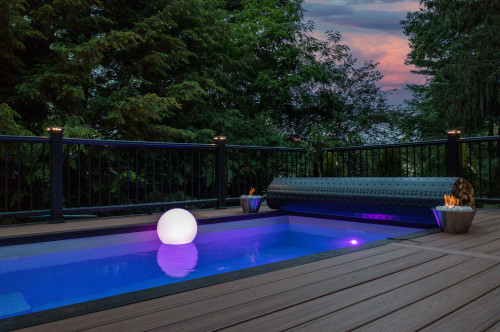
Why 7′ x 13′
When we talk about scale in architecture, it can be difficult to translate outdoor dimensions into something that is relatable for indoor comfort.
Think of the 7′ x 13′ footprint (2X4m) not as a shrunken swimming pool, but as a standard large area rug.
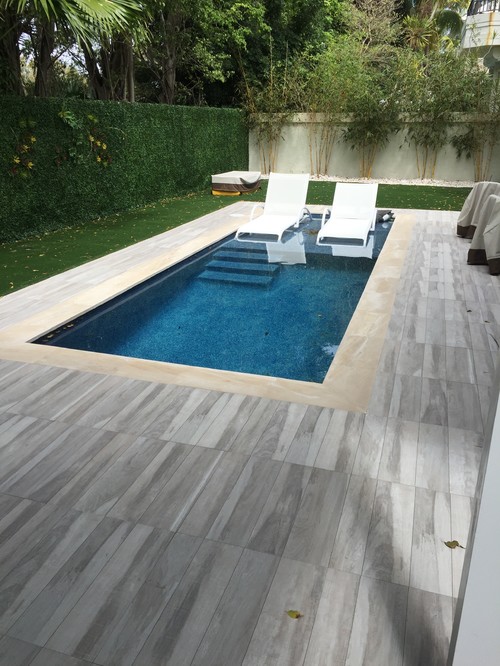
By framing the dimensions this way, the pool becomes an extension of the living room: a relatable, human-scale feature that fits the existing rhythm of a home.
The true magic, however, lies in the 5-foot (1.5m) depth.
This definitely isn’t a shallow “kiddie pool”; It is deep enough for a classic “pencil jump” or a standing cocktail hour, yet contained enough to feel intimate and safe. It functions as a high-end playpen for children and a sophisticated retreat for adults.
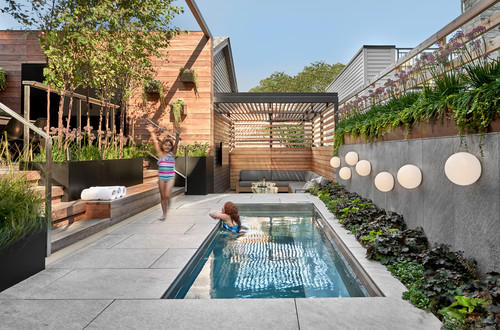
For architects, this footprint is the ultimate problem-solver.
It transforms the neglected side yard or the land-locked courtyard—spaces traditionally written off as “too small”—into a primary destination.
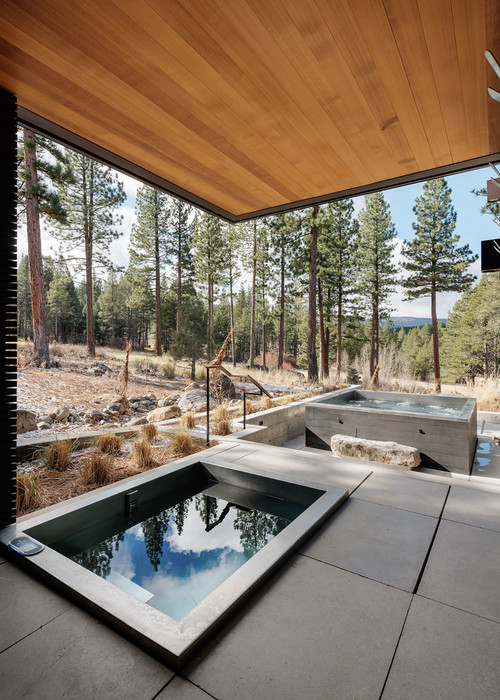
If you have a smaller property where every centimeter matters, this is the solution for you and the best part is that it is fitting where a traditional pool simply cannot.
Pool by Day, Spa by Night
From a technical standpoint, the spool is a masterpiece of thermal agility. Traditional pools suffer from massive thermal inertia—once they are cold, they stay cold for days unless you are willing to spend a fortune on energy.
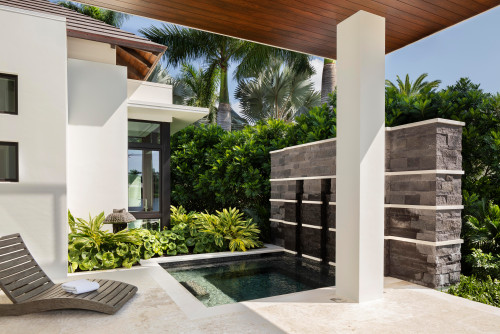
With a plunge pool, the physics shift entirely in your favor. Because you are managing a significantly lower water volume, the system can respond to temperature changes with incredible speed.
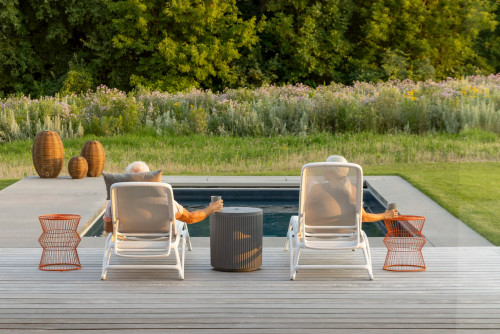
This creates a true “Dual Functionality” that was previously impossible. You can enjoy a crisp, refreshing 27°C (80°F) plunge during the heat of a 2:00 PM sun, and by the time you’ve finished dinner at 8:00 PM, the high-efficiency heater has pivoted the water to a steaming 38°C (100°F). It is perhaps the only architectural feature that fundamentally changes its purpose based on the time of day.
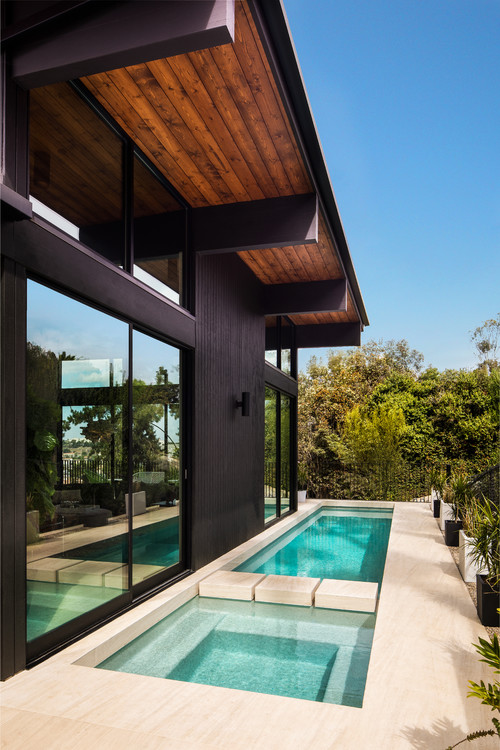
Speak about sustainable luxury!
Heating a spool costs a mere fraction of what it takes to maintain a full-sized pool, making it a viable year-round amenity rather than a seasonal burden.
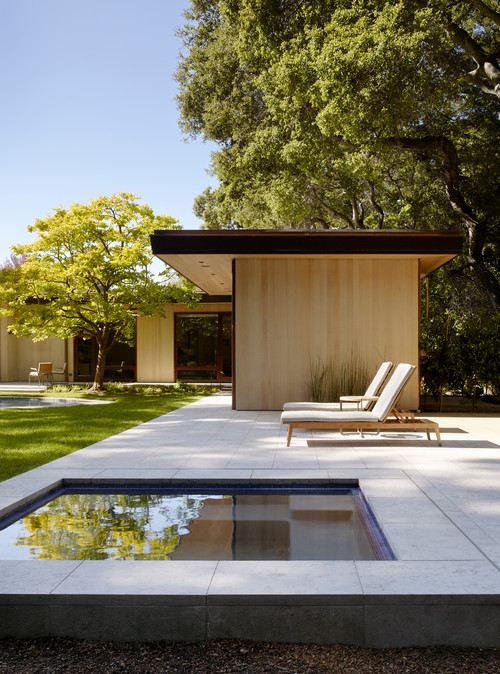
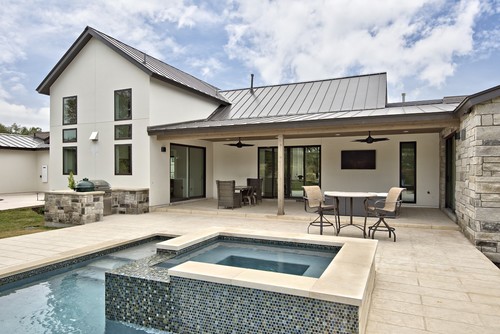
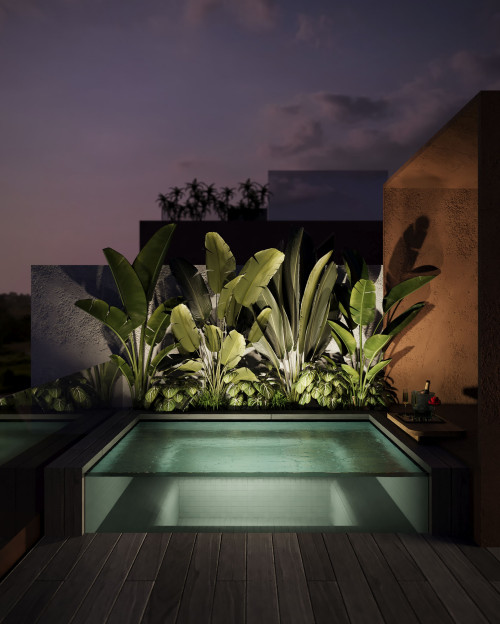
For the designer, this represents the ultimate combo: a high-performance system that delivers the relaxation of a hot tub and the utility of a pool within one energy-efficient package.
Pre-Cast vs. Site-Built plunge pool
From a specification standpoint, the spool is a significant departure from the standard “hole in the ground.”
Unlike traditional pools, a Soake Pool arrives as a fully tiled architectural vessel.
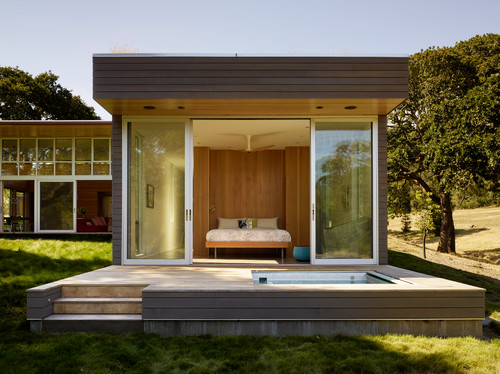
you are selecting a finish, a bench configuration, and a tile palette that mirrors the sophistication of your indoor spaces. It’s the difference between a “kiddie pool” and a permanent, high-end installation.
The best part of this approach is the off-site construction.
By shifting the build to a controlled environment, you bypass the unpredictability of site-specific labor and weather.
For the architect, this ensures a level of quality control that is nearly impossible to achieve with a traditional pour.
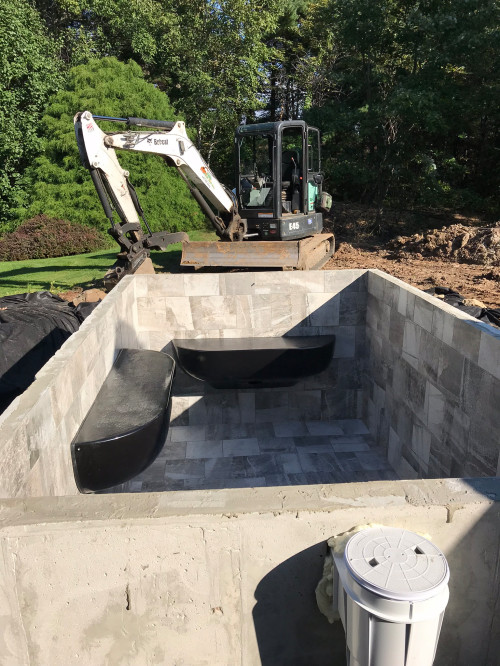
It arrives as a finished product, meaning the precision of the tiling and the integrity of the concrete shell are guaranteed before it ever touches your client’s property.
Then, there is the “Crane Factor.” We have all worked on projects where the backyard felt like a land-locked island, inaccessible to the heavy machinery required for a traditional excavation.
Because these pools are pre-cast concrete shells, they can literally be craned over the roof of an existing house and dropped into position.
This logistical flexibility transforms “impossible” urban sites into luxury retreats without the need for a construction-friendly wide-access lot.
Perhaps the most compelling argument for the spool is the compressed timeline. A traditional, site-specific pool can easily swallow a year of construction, turning a backyard into a mud pit for multiple seasons.
A pre-cast plunge pool, however, can be fully installed and operational in a matter of months.
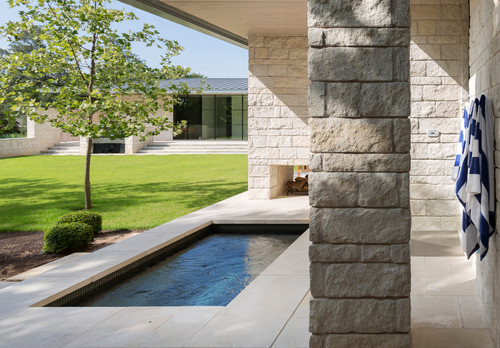
If you are organized with your trenching and mechanical prep, you can take a project from “breaking ground” to “first dip” in a fraction of the time, providing a much higher ROI for the homeowner’s patience.
Site Integration: Creating a “Secret Luxury”
To honor the property’s vibe, create a courtyard that makes the pool a “secret luxury” you don’t notice at first.
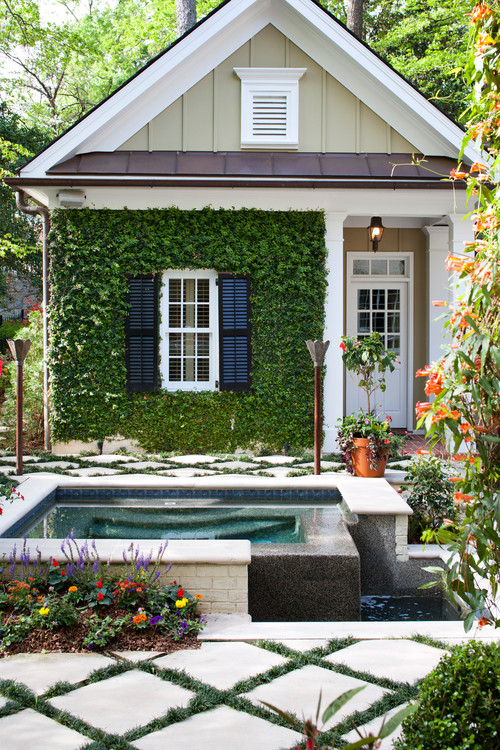
This integration ensures the feature feels natural to the setting rather than an intrusion.
All mechanical equipment, such as the pump, filter, and heater, is hidden behind a pool house and trenched to the site. This keeps the infrastructure completely out of sight and away from the social area.
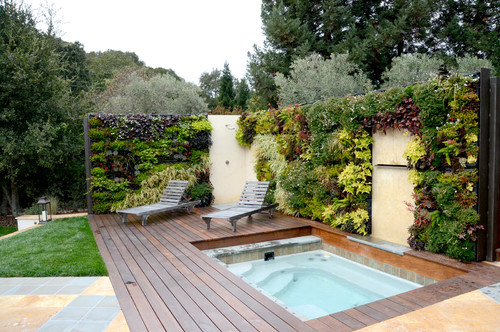
An electric cover can provide essential security for children without being an eyesore. Operated by a high-mounted toggle, the cover is unobtrusive and barely visible, maintaining clean architectural lines while adding functional value year-round.
The Lifestyle ROI
Let’s talk about the ROI. The true value of a spool is of course in the property appraisal, but in addition to that, in the radical increase in year-round usability.
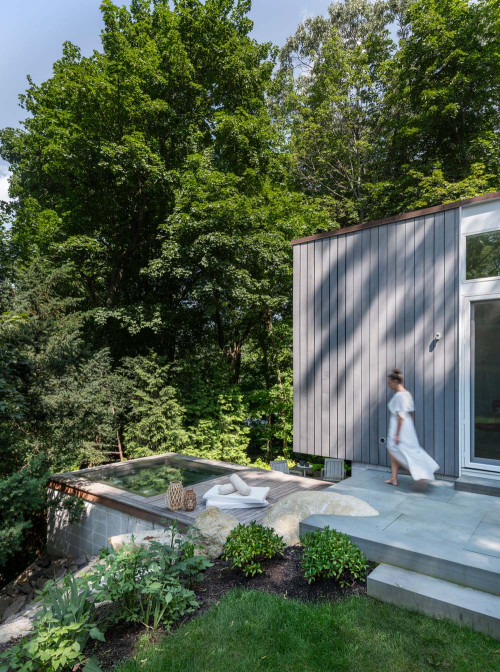
In climates where a traditional pool might sit dormant and chilly for most of the year, this system does the opposite.
Because it can heat up so quickly to become a hot tub, it transitions from a summer cooling-off spot to a winter retreat in a matter of hours.
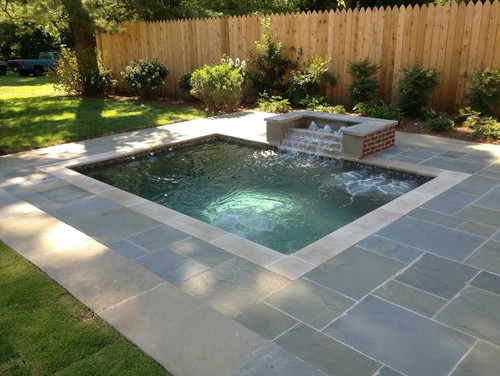
It effectively eliminates the “off-season,” ensuring the backyard remains a functional destination regardless of the weather.
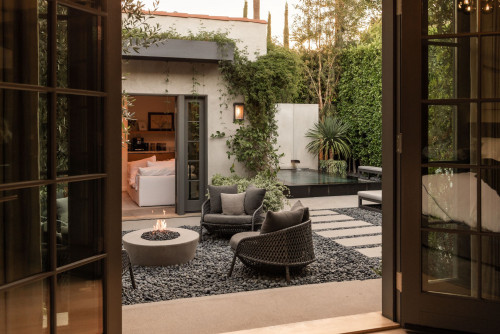
Beyond the thermal flexibility, the spool acts as a versatile “social playpen” that adapts to whoever is using it.
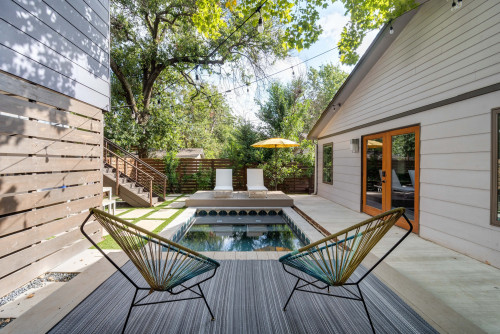
For families, it is a contained environment where you can have eight kids playing for hours while the adults relax nearby.
Yet, it easily shifts into a quiet, high-end spot for a “happy hour” soak with a book or a full-blown hot tub party with friends.
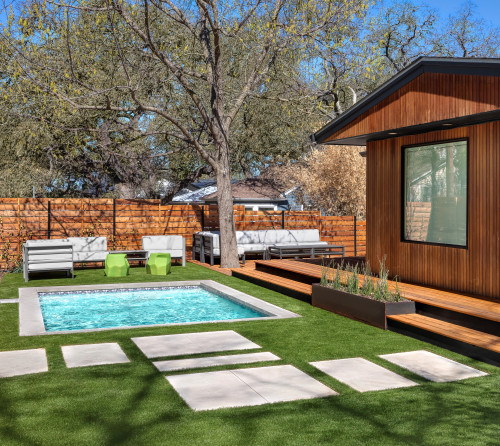
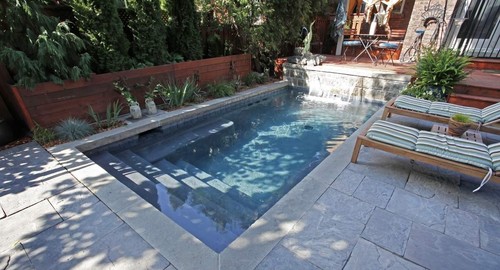
It’s a rare architectural feature that manages to be both a high-energy play zone and a sophisticated adult sanctuary.
Ultimately, the ROI comes down to the quality of the experience.
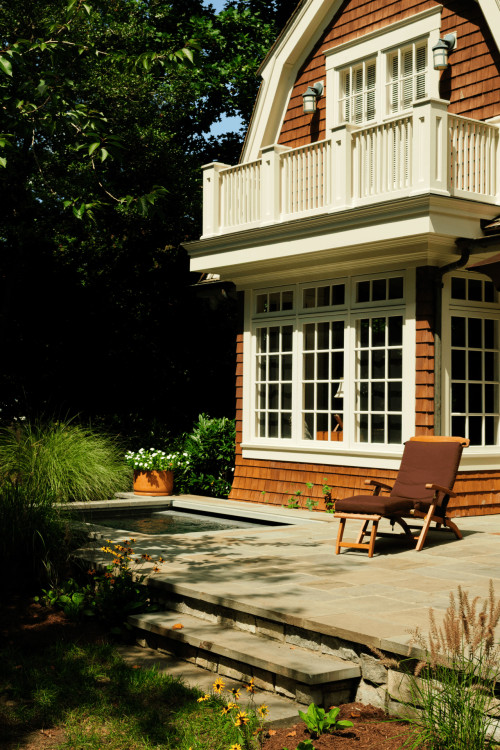
This isn’t a temporary or “cheap” solution; it is a high-quality, secret luxury that looks and feels high-end. By exceeding the expectations of how a small space can function, it adds immense value to how homeowners actually inhabit their outdoor space. It turns a standard backyard into a multi-purpose asset that feels perfectly scaled for daily life.
Conclusion
The shift toward the “spool” proves that a massive footprint is no longer a prerequisite for luxury.
By condensing the pool to a 7’x13′ footprint, homeowners gain a high-quality vessel that transitions from a cooling-off spot to a rapid-heat hot tub in a single day.
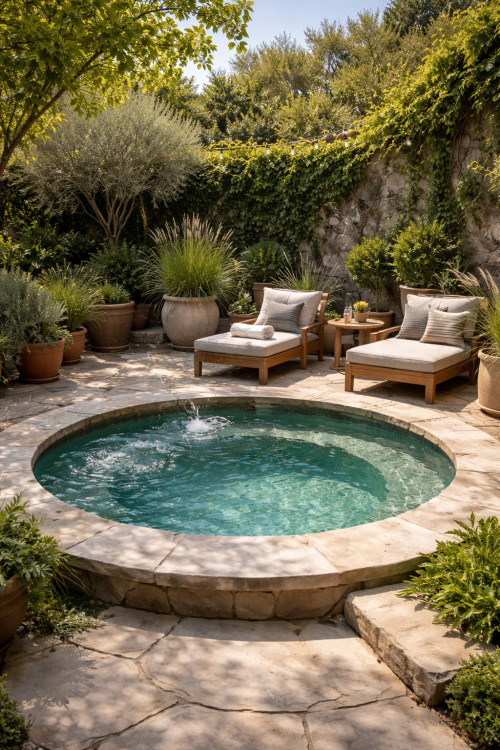
In the 2026 design landscape, smaller is simply smarter—offering a more efficient, manageable, and affordable alternative to traditional site-specific builds.
Ultimately, the value of a plunge pool is defined by the frequency of use rather than square footage.
It transforms a backyard into a year-round destination that adapts to every phase of life, from a social playpen for kids to a sophisticated adult retreat.
This “secret luxury” proves that true high-end design isn’t about size; it’s about the quality of the intervention and the daily joy it brings to the home.