Tile countertops are having a comeback, but they are not the same tile countertops many people remember from older kitchens. The right tile can make a kitchen feel custom, warm, colorful, and full of character. The wrong tile can make the countertop harder to clean, visually busy, and frustrating to use every day.
When choosing countertop tiles for kitchen spaces, the decision is not only about color or pattern. You have to think about the material, grout lines, tile size, surface finish, edge detail, and how much maintenance you are willing to handle. A kitchen countertop is a working surface first. It has to deal with water, food prep, oil, crumbs, hot pans, cleaning products, and everyday use.
That does not mean tile is a bad choice. It just means tile needs to be chosen more carefully than a backsplash tile. A backsplash can be decorative. A countertop has to be practical too.
Posh Chic Cool is a participant in the Amazon Services LLC Associates Program, an affiliate advertising program designed to provide a means for sites to earn advertising fees by advertising and linking to Amazon.com. As an Amazon Associate, I earn from qualifying purchases at no extra cost to you. Disclaimer, Privacy Policy and Terms and Conditions
Are Tile Countertops a Good Idea for Kitchens?
Tile countertops can be a good idea for kitchens, but they work best when the design is planned around daily use. They are not the lowest-maintenance countertop option, and they will not give you the same smooth, uninterrupted surface as quartz, granite, or marble slabs. Still, they can be a beautiful choice if you want a kitchen that feels more personal and less expected.
The biggest thing to think about is grout. Every tile countertop has grout lines, and grout lines need cleaning. That does not automatically make tile a bad option, but it does mean the tile size, grout color, and grout width matter a lot.
Tile countertops are also very style-specific. They can look charming in a vintage kitchen, warm in a Mediterranean-inspired kitchen, fresh in a colorful kitchen, and very intentional in a handmade-style design. But if the goal is a completely smooth, minimal surface, tile may not be the best fit.
When Tile Countertops Make Sense
Tile countertops make the most sense when you want texture, color, or a more custom look. They can work beautifully in kitchens that lean vintage, cottage, Spanish, Mediterranean, farmhouse, retro, or eclectic. They can also be a smart choice if you want the countertop and backsplash to feel connected instead of treated as two separate surfaces.
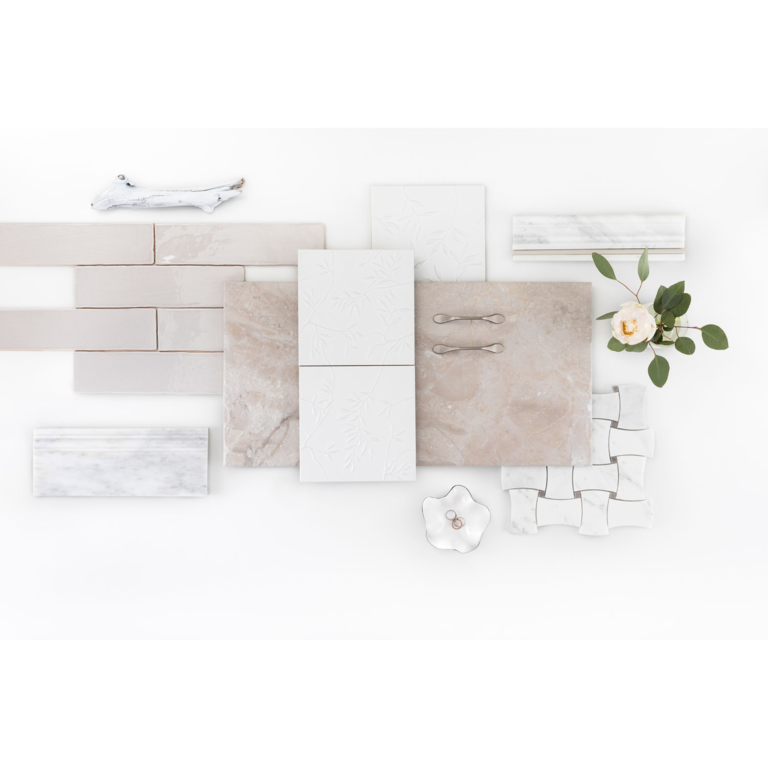
They are especially interesting in kitchens where the tile is part of the whole design idea. For example, a soft neutral tile running from the counter up the wall can make the kitchen feel calm and cohesive. A colorful tile countertop can also work if the cabinets, walls, and hardware are kept simple enough to let the tile be the main feature.
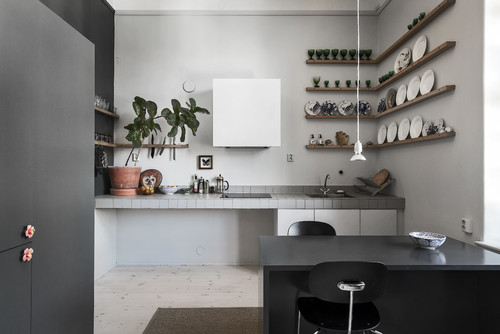
Tile can also be more budget-friendly than a full stone slab, depending on the tile you choose and the installation cost. Natural stone tile, porcelain tile, or ceramic tile can give you a custom surface without the same price tag as slab stone.
When Tile Countertops May Not Be the Best Choice
Tile countertops may not be the best choice if you want a completely smooth surface for rolling dough, wiping crumbs in one motion, or keeping grout maintenance to a minimum. The grout lines will always be part of the look and the cleaning routine.
They may also feel too busy in kitchens that already have a lot happening. If your cabinets have strong grain, your backsplash has pattern, your flooring has movement, and your hardware has contrast, adding a tiled countertop can make the room feel visually crowded.
Tile is also not the best place to experiment with rough or heavily textured surfaces. A textured wall tile may look beautiful on a backsplash, but on a countertop it can catch crumbs, oil, and dust. For a kitchen work surface, easy cleaning should come before decorative texture.
Best Tile Material for Kitchen Countertops
The best tile for kitchen countertops usually comes down to three options: porcelain, ceramic, and natural stone. Each one can work, but they are not equal when it comes to durability, maintenance, and how forgiving they are in a real kitchen.
Porcelain is usually the safest choice for most kitchens. Ceramic can work if you choose the right type and finish. Natural stone tile can be beautiful, but it needs more care and a more realistic approach to maintenance.
Porcelain Tile Countertops
Porcelain is one of the best choices for kitchen countertop tile because it is dense, durable, and generally easier to maintain than many other tile options. It is less absorbent than standard ceramic tile, which makes it a stronger choice for a surface that will see water, spills, and food prep.
Porcelain tile also gives you a lot of design flexibility. You can find porcelain that looks like stone, concrete, marble, terrazzo, or handmade tile. That makes it useful if you want the feeling of a natural material without taking on the same level of maintenance.
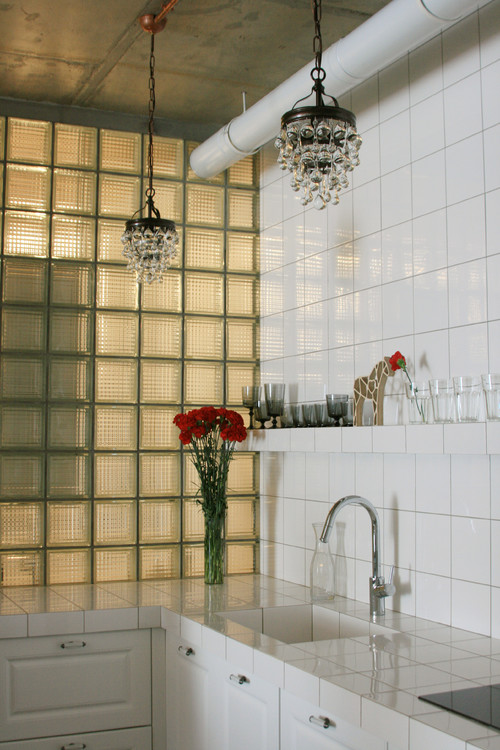
Large-format porcelain tile can look especially modern on countertops because it reduces the number of grout lines. Smaller porcelain tiles can still work, but the more grout lines you add, the more cleaning you create for yourself.
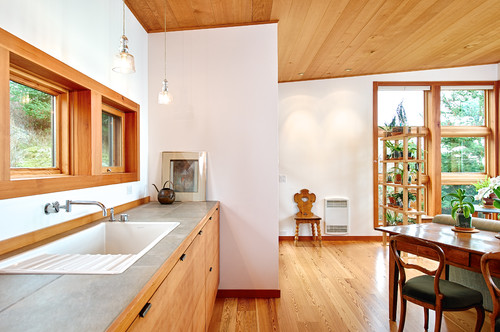
Porcelain is harder to cut than ceramic, so installation is not always the easiest DIY project. If the edges, corners, sink cutout, and grout lines are not handled well, even a beautiful tile can look unfinished. This is a material where the installer matters.
Ceramic Tile Countertops
Ceramic tile can also be used for kitchen countertops, but it needs to be chosen carefully. It is usually easier to cut and install than porcelain, which can make it appealing for smaller projects or budget-conscious renovations. It also comes in a huge range of colors, finishes, and handmade-style options.
The safest route is usually glazed ceramic tile. The glaze gives the tile a more protective surface and makes it easier to wipe clean. Unglazed or very porous ceramic tile can be harder to live with on a kitchen countertop, especially around the sink or food prep areas.
Ceramic tile works well when the kitchen has a more casual, charming, or vintage-inspired look. It can give the counter a softer, less polished feeling than stone or quartz. That said, it is usually not the best choice if you want the most durable or lowest-maintenance tile countertop possible.
Think of ceramic as the more approachable option, not always the most practical one. It can be lovely, but the finish, grout, and installation need to support daily use.
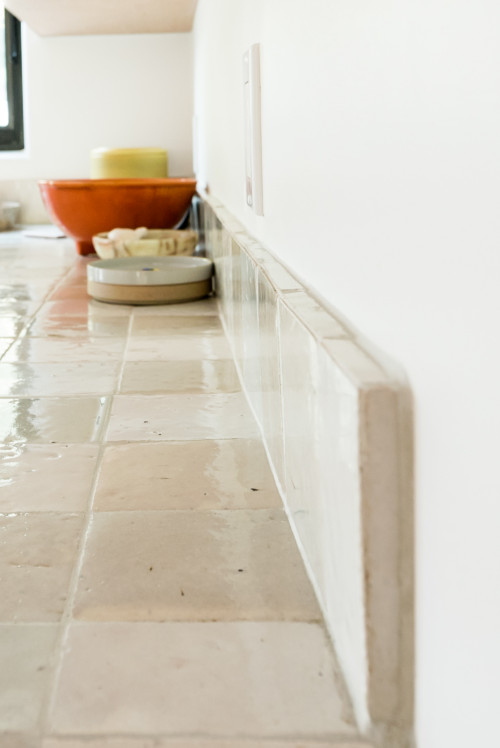
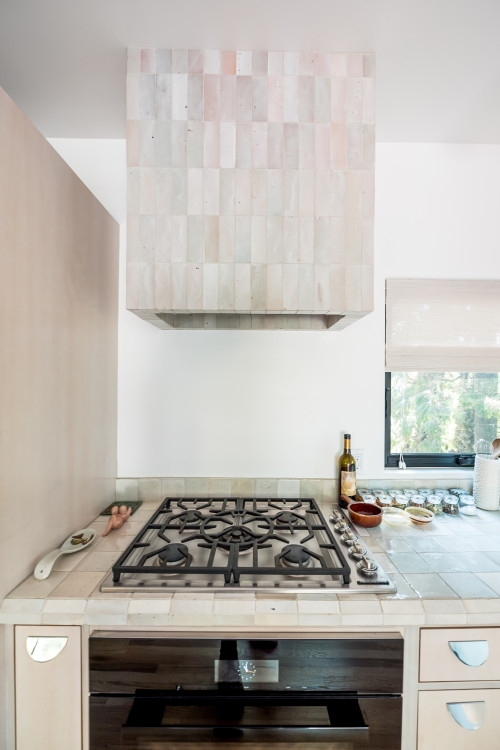
Natural Stone Tile Countertops
Natural stone tile can give you the look of real stone without using a full stone slab. Granite, quartzite, slate, soapstone, and some limestone tiles can create a rich, natural countertop surface. The result can feel warm, expensive, and more layered than a manufactured material.
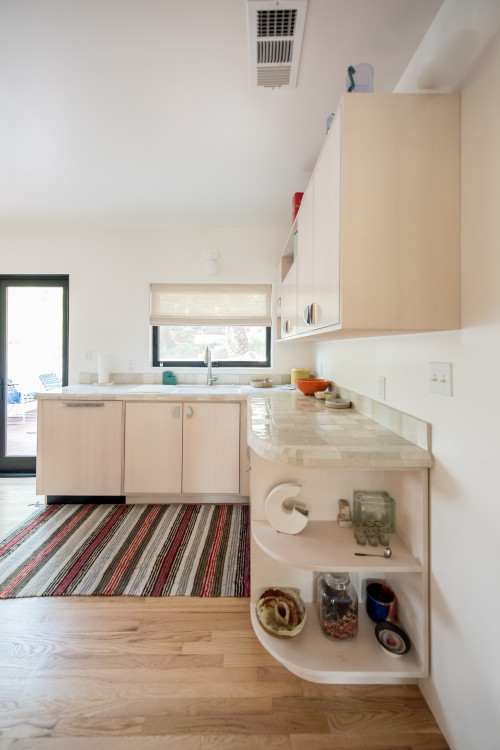
The tradeoff is maintenance. Natural stone is more sensitive than porcelain or glazed ceramic. It may need sealing, and some stones can stain, scratch, or react to acidic foods and cleaners. Marble is especially tricky in kitchens because it can etch from lemon juice, vinegar, wine, and other acidic ingredients.
Natural stone tile also has grout lines, so you get the maintenance of stone plus the maintenance of grout. That does not mean you should avoid it completely. It just means you should choose it because you love the natural variation and are comfortable with the upkeep.
Stone tile works best when the kitchen can handle a slightly imperfect, lived-in look. If every mark will bother you, porcelain may be a better choice.
Quick Comparison: Porcelain vs Ceramic vs Natural Stone Tile
| Tile Type | Best For | Main Downside |
|---|---|---|
| Porcelain tile | Durable, lower-maintenance kitchen countertops | Harder to cut and install |
| Ceramic tile | Budget-friendly or vintage-style kitchens | Less dense than porcelain |
| Natural stone tile | Real stone character for less than a slab | Needs sealing and more care |
Choose the Right Tile Size for Countertops
Tile size has a huge effect on how practical the countertop will be. It also changes the way the kitchen looks. Small tiles create more pattern and more grout lines. Larger tiles create a calmer surface and are usually easier to clean.
For countertops, the goal is usually to reduce unnecessary grout without making the tile look awkward on the counter depth. You want the tile to feel intentional, not like a floor tile was randomly placed on a work surface.
Why Larger Tiles Usually Work Better
Larger tiles are usually better for kitchen countertops because they mean fewer grout lines. Fewer grout lines make the countertop easier to clean and visually calmer. This is especially helpful in kitchens where the backsplash, cabinets, flooring, or hardware already have a strong design presence.
Large tiles can also make a small kitchen feel less chopped up. When the countertop has fewer interruptions, the eye moves across the surface more easily. That can make the kitchen feel cleaner and more open.
The only thing to watch is scale. Very large tiles can look beautiful, but they need to be planned carefully around the sink, cooktop, corners, and edges. The layout should be decided before installation so you do not end up with awkward slivers of tile in visible areas.
Why Very Small Tiles Are Harder to Live With
Small tiles can look charming, especially in photos, but they are usually harder to maintain on a countertop. Every small tile adds more grout. More grout means more places for crumbs, spills, and discoloration to show.
That does not mean small tile is never an option. It can work in a decorative kitchen, a vintage-inspired kitchen, or a space where the countertop is not used heavily for cooking. But for a busy family kitchen or a main prep area, small tiles can become annoying fast.
If you love the look of small tile, consider using it on the backsplash instead. You still get the texture and pattern, but you avoid turning the main work surface into a cleaning project.
A Safe Tile Size to Consider
A medium tile size is often the safest starting point. Something around 15 x 15 cm can give you the classic tile countertop look without creating as many grout lines as tiny mosaic tile. It feels intentional, familiar, and easier to design around.
If you want a more modern look, go larger. If you want a more vintage look, medium square tiles can feel right. The key is to choose a size that works with your kitchen style and your cleaning habits.
Before choosing the final tile size, look at the counter depth, sink placement, and edge detail. A tile that looks perfect on a sample board may create awkward cuts once it meets the real dimensions of the countertop.
Choose a Tile Shape That Does Not Overwhelm the Kitchen
Tile shape matters because countertops are horizontal surfaces. You see them from above, from the side, and against the cabinets. A shape that feels subtle on a wall can feel much stronger on a countertop.
The safest shapes for kitchen countertops are usually simple and balanced. Square tiles, soft rectangles, and some hexagon tiles can work well. Very busy shapes need more care because they can make the counter feel crowded.
Square Tiles
Square tiles are the classic choice for kitchen countertops. They create a regular grid, which makes them easy to plan and easy to understand visually. Depending on the color and grout, square tile can look vintage, modern, rustic, or clean and minimal.
A neutral square tile with matching grout can feel calm and timeless. A colored square tile can feel playful and retro. A handmade-style square tile can add texture without making the surface feel too busy.
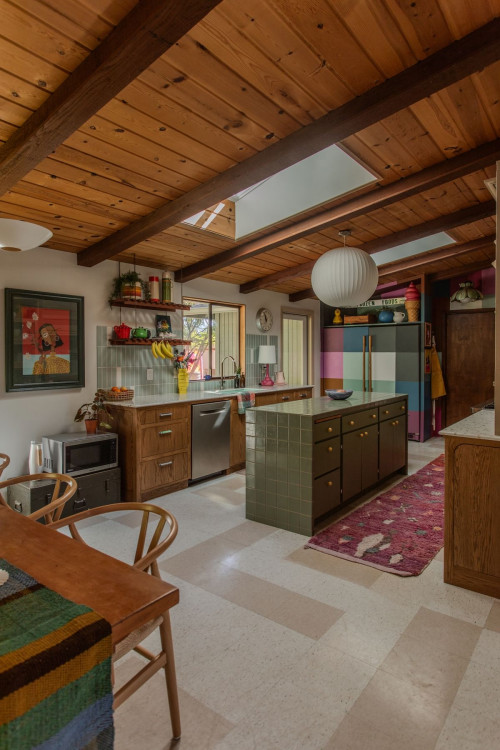
Square tiles also make the layout easier to control. The lines are predictable, which helps around sinks, corners, and edges. If you want a tile countertop that feels intentional without being overly decorative, square tile is usually a strong choice.
Hexagon Tiles
Hexagon tiles can work on kitchen countertops when you want more visual interest than a basic square. They bring in a softer, more decorative pattern, but they still feel balanced because the shape repeats evenly.
Small hexagon tiles can quickly become grout-heavy, so they need to be used with care. Larger hexagon tiles are usually easier to live with and can feel more current. The grout color also matters. Matching grout will soften the pattern, while contrasting grout will make every shape stand out.
Hex tiles are best when the rest of the kitchen is fairly simple. If the cabinets, backsplash, and flooring are already detailed, a hex countertop may be too much.
Rectangular Tiles
Rectangular tiles can work, but they create movement. That movement can be helpful on a backsplash, where you may want to pull the eye across the wall. On a countertop, it can feel busier because the lines run across the work surface.
If you use rectangular tiles, think carefully about the direction. Running them lengthwise can make the counter feel longer. Running them front to back can make the surface feel more divided. A stacked layout will feel cleaner than a brick pattern, while a brick pattern will feel more casual and traditional.
Rectangular tiles are not wrong for countertops. They just need a clear design reason. Without that, they can make the counter feel more active than it needs to be.
Pick a Countertop Tile Color That Works With the Whole Kitchen
Color is usually the first thing people think about, but it should not be chosen by itself. A countertop color has to work with the cabinets, backsplash, flooring, wall color, appliances, and lighting. It also has to work with grout, because grout changes how the tile color reads.
For tile countertops, quieter colors are usually easier to live with. The grout already creates pattern, so the tile does not always need a dramatic color or strong veining to feel interesting.
Neutral Tile Countertops
Neutral tile countertops are usually the easiest to design around. White, cream, beige, taupe, soft gray, warm greige, and muted stone tones can all work well. They let the tile shape and texture show without making the counter feel too loud.
A neutral tile also gives you more freedom with the rest of the kitchen. You can bring in color through cabinets, artwork, rugs, hardware, lighting, or accessories. The countertop stays calm, which is helpful because it covers a large horizontal area.
If you choose white tile, pay close attention to the undertone. A cool white tile can look sharp against warm cream cabinets. A warm white tile can look yellow next to cooler finishes. Always compare the tile sample with the cabinet color, backsplash, and flooring in the actual kitchen light.
Matching Tile Color to Cabinet Color
One of the easiest ways to make a tile countertop feel more intentional is to choose a tile color close to the cabinet color. This creates a softer transition between the cabinets and the counter. It also reduces the contrast between the horizontal and vertical surfaces.
For example, cream cabinets with cream tile can feel warm and calm. Deep green cabinets with a muted green tile can feel custom and enveloping. White cabinets with white tile can feel fresh, especially if the grout is not too dark.
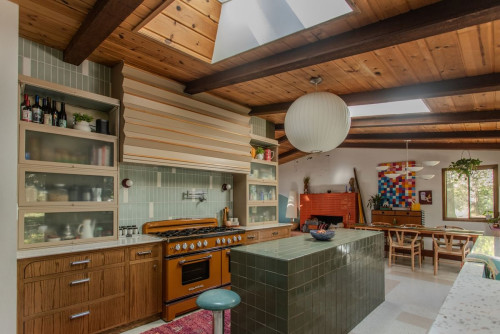
This does not mean everything has to match perfectly. A slight difference in tone can make the kitchen feel layered. The goal is to avoid a countertop that looks like a random stripe cutting across the cabinets.
When Bold Tile Countertops Work
Bold tile countertops can work beautifully, but they need to be treated as a main design feature. A colorful countertop should not have to compete with too many other strong elements. If the tile is blue, green, terracotta, black, or patterned, the rest of the kitchen needs enough breathing room.
A bold tile countertop often works best when it continues into the backsplash. This makes the color look intentional instead of isolated. The counter and wall become one design moment, which can feel much more polished than using a strong tile on the counter alone.
If you want a bold tile but feel unsure, keep the shape simple and the grout close in color. That way, the color gets attention without the surface becoming too busy.
Choose the Right Grout Color
Grout can completely change the look of a tile countertop. The same tile can feel calm, graphic, vintage, modern, or busy depending on the grout color. Since countertops are used every day, grout color also affects how much cleaning and discoloration you notice.
For most kitchens, matching or low-contrast grout is the safest choice. It keeps the surface quieter and makes the countertop easier to blend with the rest of the room.
Matching Grout
Matching grout is usually the best choice for kitchen countertops. It softens the grid and makes the tile feel more like one surface. This is especially helpful if you are using small or medium tiles.
Matching grout also makes the countertop easier to live with visually. You still see the tile texture and layout, but the lines do not take over the design. This works well in both modern and traditional kitchens.
The grout does not have to be an exact match. A slightly warmer or slightly darker shade can be more practical than a bright white grout, especially in a busy kitchen.
Contrasting Grout
Contrasting grout can look stylish, but it should be used on purpose. Dark grout with light tile creates a strong grid. Light grout with dark tile creates a similar effect. This can be beautiful in a graphic kitchen, a retro kitchen, or a space where the tile layout is part of the design.
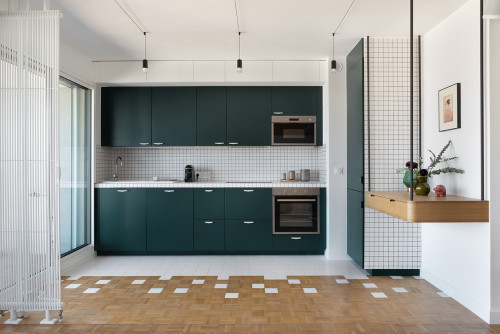
The downside is that contrasting grout highlights every line. It also highlights any uneven tile placement. If the installation is not perfect, the contrast can make small imperfections more noticeable.
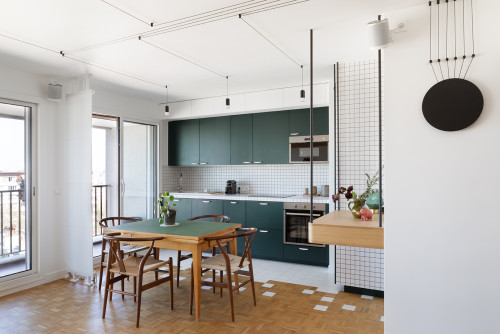
For countertops, contrasting grout works best when the tile shape is simple and the rest of the kitchen is controlled. If the kitchen already has a patterned floor, detailed backsplash, or busy stone, high-contrast grout may be too much.
Grout Width and Maintenance
Grout width matters just as much as grout color. Narrower grout lines usually look cleaner and are easier to blend into the countertop. Wider grout lines create more visual pattern and more surface area to clean.
The right grout width depends on the tile edge and tile type. Handmade-style tiles often need slightly wider grout lines because the edges are irregular. Rectified tiles can usually handle tighter grout lines because the edges are more precise.
Before installation, ask how wide the grout lines will be and what grout will be used. This is not a small detail. It affects the final look of the entire countertop.
Best Surface Finish for Kitchen Countertop Tiles
The tile finish affects both the look and the cleaning experience. A countertop tile should be smooth enough to wipe easily, but not so glossy or reflective that every mark becomes obvious.
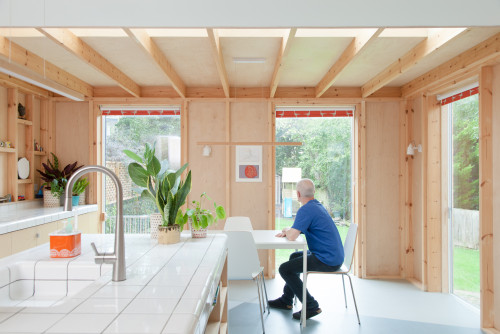
For kitchens, the best finishes are usually smooth matte, satin, honed, or lightly glossy surfaces. Rough, heavily textured, or porous finishes are harder to live with on a work surface.
Matte and Honed Finishes
Matte and honed finishes are often the easiest to style in a modern kitchen. They feel softer than high-gloss finishes and can make stone-look tile feel more natural. They also tend to reduce glare, which is helpful on a large horizontal surface.
A matte porcelain tile can be a strong option if you want a calm, practical countertop. It gives you a less shiny look while still being easier to maintain than many natural materials.
The one thing to check is cleanability. Some matte tiles can show grease or fingerprints more than expected. Always test a sample if possible. Wipe it, touch it, and see how it reacts before using it across the whole kitchen.
Glossy Tiles
Glossy tiles can work on kitchen countertops, especially if the tile is simple. A glossy white, cream, or solid-color tile can feel clean, classic, and bright. It can also bounce light around the kitchen, which is helpful in darker spaces.
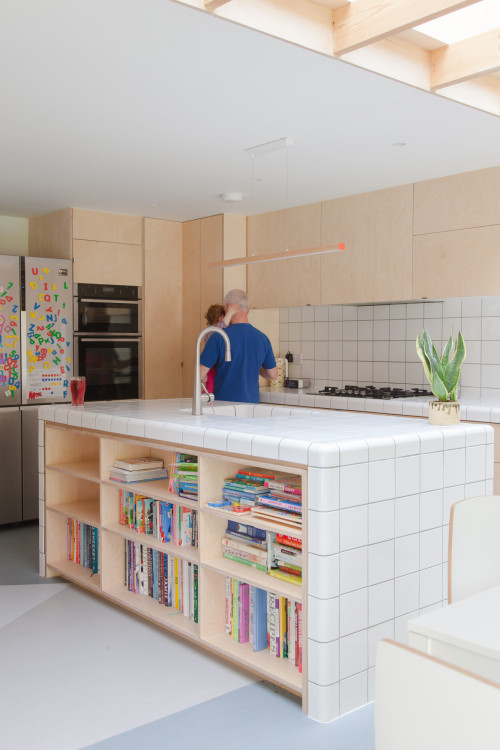
The risk is that glossy tile can become too reflective when the tile has a lot of pattern or movement. A shiny marble-look tile with dramatic veining may feel busy once it is spread across a full countertop.
Glossy finishes can also show water spots, smudges, and streaks depending on the color. If you like a glossy tile, choose a sample and test it in your kitchen light before making the final decision.
Textured Tiles
Textured tile is usually not the best choice for kitchen countertops. It may look beautiful on a sample board, but the texture can catch crumbs, oil, flour, dust, and spills. That makes the surface harder to wipe clean.
A little surface movement is fine. A handmade-style tile with slight variation can add character. But a rough, ridged, raised, or heavily textured tile is better saved for walls, fireplaces, or decorative areas.
For countertops, smooth wins. You can still get texture through color variation, handmade edges, grout tone, or the way the tile is laid. The surface itself should be easy to clean.
Tile Countertop Edge Details
The edge detail is one of the most overlooked parts of a tile countertop. It can make the difference between a countertop that looks intentional and one that looks unfinished.
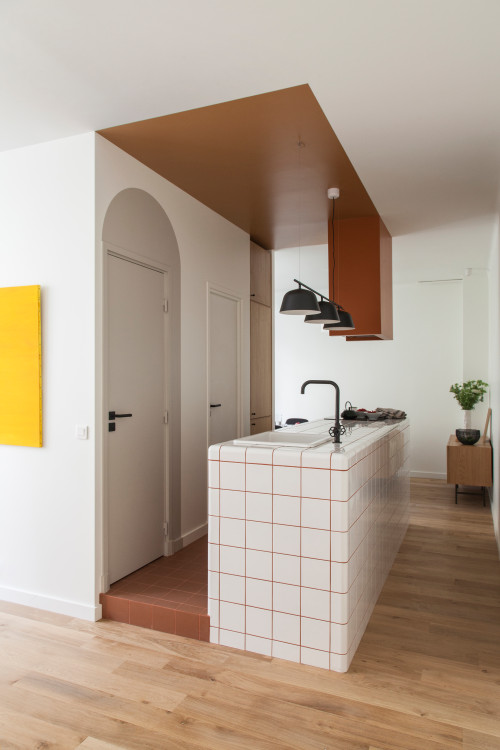
When you choose the tile, you also need to think about how the front edge, side edges, corners, and sink area will be finished. A beautiful tile can still look awkward if the edge is not planned from the start.
Why Edges Matter
A slab countertop has a finished edge built into the material. Tile does not work that way. Tile needs a plan for how the surface will end. If that plan is missing, the countertop can look messy, even if the tile itself is beautiful.
The edge also affects the style of the kitchen. A rounded bullnose edge can feel traditional or retro. A metal trim can feel more modern or utilitarian. A mitered tile edge can look cleaner and more custom, but it requires a skilled installer.
The edge should match the design direction of the kitchen. It should not feel like an afterthought.
Common Edge Options
Common tile countertop edge options include bullnose tiles, matching trim pieces, metal trim, wood edging, and mitered tile edges. The best option depends on the tile, the countertop thickness, and the style of the kitchen.
Mitered edges can look beautiful with porcelain or stone-look tile, but they need careful installation.
Before buying the tile, check whether matching edge pieces are available. If they are not, ask your installer how the edges will be finished. This is much easier to solve before the tile is ordered.
Tile Countertop Maintenance
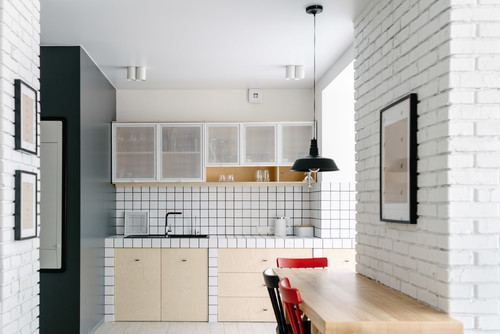
Tile countertops are not difficult to maintain if you choose the right tile and grout, but they do need regular care. The tile surface may be easy to wipe down, but the grout lines need more attention.
The most maintenance-friendly tile countertop will usually have durable tile, narrow grout lines, low-contrast grout, and a smooth surface. The more texture, grout, and natural porosity you add, the more maintenance you create.
How to Clean Tile Countertops
For everyday cleaning, use a mild cleaner and a soft cloth or sponge. Wipe spills as soon as you can, especially around grout lines. Food, oil, coffee, wine, and acidic ingredients can be more annoying if they sit too long.
Avoid very rough scrubbers on the tile and grout. They can wear down the grout or scratch some tile surfaces. A soft brush can help with grout lines, but it should not be so stiff that it damages them.
If you are using natural stone tile, be careful with acidic cleaners. Vinegar, lemon-based cleaners, and harsh products can damage some stone surfaces. Use a cleaner that works with the specific stone you have.
How to Maintain Grout
Grout is the part of a tile countertop that needs the most care. It can stain, discolor, or absorb moisture if it is not sealed properly. Depending on the type of grout used, it may need sealing from time to time.
Darker grout can hide some discoloration, but it is not maintenance-free. Light grout can look fresh and clean, but it may show stains faster. Mid-tone grout is often the easiest to live with because it hides more than bright white but does not create a harsh grid.
Keep grout clean with gentle, regular care instead of waiting until it needs heavy scrubbing. That will help the countertop look better over time.
What to Avoid
Avoid metal brushes, harsh abrasive pads, and cleaners that are too strong for the tile or stone. These can damage the surface, weaken the grout, or make the countertop age faster.
Avoid leaving standing water around grout lines, especially near the sink. Also avoid using textured tile in areas where you cook, chop, mix, or clean often.
The goal is not to baby the countertop. The goal is to choose and maintain it in a way that fits real kitchen life.
Common Mistakes to Avoid With Tile Kitchen Countertops
Tile countertops can look beautiful, but a few choices can make them much harder to live with. Most mistakes happen when the tile is chosen only for how it looks in a photo, without thinking through the cleaning, edges, grout, and layout.
A tile countertop needs to be designed like a working surface. The more practical decisions you make at the beginning, the better the finished kitchen will feel.
Choosing Tile Only Because It Looks Good in a Photo
Some tiles photograph beautifully but are not practical on a kitchen countertop. A rough texture, deep groove, uneven surface, or heavily patterned finish may look interesting online, but it can be frustrating once you are wiping crumbs and spills every day.
Before choosing a tile, ask how it will feel to clean. Ask how it will look with grout. Ask how it will be cut around the sink and edges. A tile can be beautiful and still be wrong for the countertop.
Using Too Many Small Tiles
Small tiles create more grout lines. More grout lines mean more cleaning and more visual pattern. That can be charming in the right kitchen, but it can also make the counter feel busy.
If you want an easier tile countertop, choose medium or larger tiles. You will still get the tiled look, but with less grout to maintain.
Choosing High-Contrast Grout Without a Design Reason
High-contrast grout makes every tile line visible. That can be a strong design choice, but it should be intentional. If you use dark grout with light tile just because it looks trendy, you may end up with a countertop that feels too graphic for the kitchen.
Low-contrast grout is usually easier to live with. It lets the tile be the focus instead of the grid.
Forgetting About the Edge
The countertop edge needs a plan. Without one, even expensive tile can look unfinished. This is especially true around exposed ends, islands, peninsulas, and sink areas.
Ask about edge pieces, trim, and mitering before ordering the tile. Do not leave this decision until installation day.
Choosing a Rough or Textured Finish
Textured tile is better for walls than countertops. A countertop needs to be wiped clean often, and rough surfaces make that harder. If you want texture, choose a tile with subtle color variation or handmade-style edges instead of a rough surface.
So, What Is the Best Tile for Kitchen Countertops?
For most kitchens, glazed porcelain tile is the best tile for kitchen countertops. It is durable, practical, and available in many colors, sizes, and stone-look finishes. It gives you the design flexibility of tile without as much maintenance as many natural materials.
Ceramic tile can also work, especially in vintage-inspired or budget-friendly kitchens. Choose glazed ceramic and keep the grout lines as practical as possible. Natural stone tile is best for someone who loves the look of real stone and is comfortable with sealing, grout care, and natural variation.
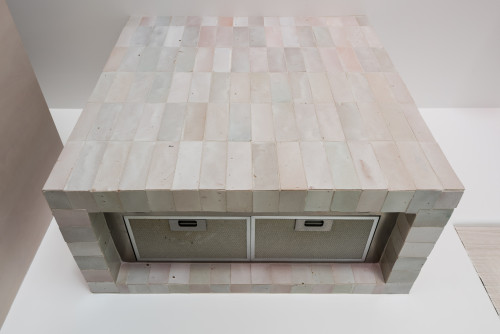
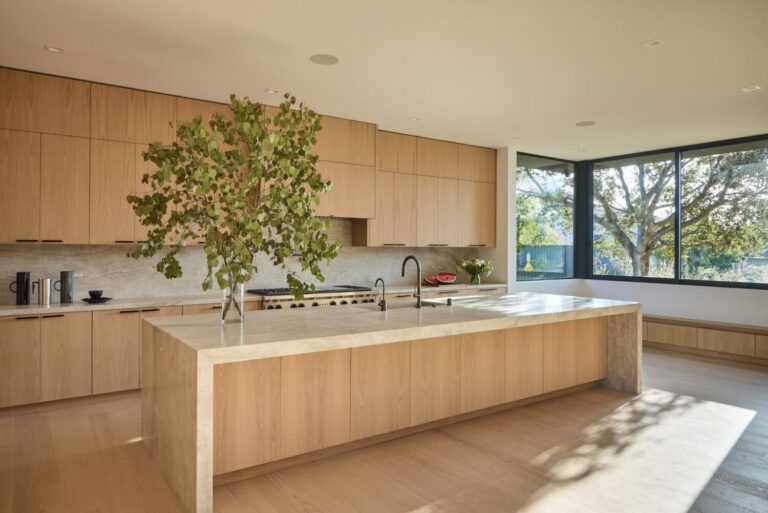
Photo by Driftwood Studio, Inc – Search kitchen design ideas
The best choice is not only the prettiest tile. It is the tile that works with your cabinets, your kitchen style, your cleaning habits, and the way you actually use the countertop.
FAQ About Tile Kitchen Countertops
Are tile countertops outdated?
Tile countertops are not automatically outdated. They can look fresh and intentional when the tile size, grout color, edge detail, and overall kitchen design are handled well. The outdated look usually comes from busy grout, awkward edges, old colors, or tile that does not match the rest of the kitchen.
Is porcelain or ceramic tile better for kitchen countertops?
Porcelain tile is usually better for kitchen countertops because it is denser and more durable. Ceramic tile can still work, especially if it is glazed, but porcelain is often the safer choice for a surface that gets daily use.
Do tile countertops need to be sealed?
The tile itself may or may not need sealing depending on the material. Porcelain and glazed ceramic usually need less maintenance than natural stone. Grout, however, often needs sealing, and natural stone tile usually needs sealing too.
Are tile countertops hard to clean?
The tile surface can be easy to clean, especially if it is smooth and nonporous. The grout lines are the part that need more attention. Larger tiles, narrower grout lines, and low-contrast grout can make the countertop easier to maintain.
What tile size is best for kitchen countertops?
Medium to larger tiles are usually best for kitchen countertops because they reduce the number of grout lines. Small tiles can look charming, but they create more cleaning work. The right size depends on the counter depth, sink placement, edge detail, and the style of the kitchen.
Can you use backsplash tile on countertops?
Sometimes, but not always. A backsplash tile may not be strong, smooth, or practical enough for a countertop. Before using any tile on a counter, check whether it is suitable for horizontal surfaces and daily kitchen use.
What grout color is best for tile countertops?
A matching or low-contrast grout color is usually best. It keeps the surface calm and makes the countertop easier to blend with the rest of the kitchen. High-contrast grout can work, but it creates a stronger grid and should be used only when that is part of the design.
Final Thoughts
Tile countertops can be beautiful, practical, and full of personality, but they need to be chosen with more care than a backsplash tile. The material, size, grout, finish, and edge detail all affect how the countertop looks and how easy it is to use every day.
For most kitchens, porcelain tile is the safest choice. Ceramic tile can work when the finish is right, and natural stone tile can be beautiful if you are comfortable with extra care. Large or medium tiles are usually easier to maintain than small tiles, and matching grout will almost always feel calmer than high-contrast grout.
The best tile countertop is not the one that only looks good in a photo. It is the one that fits your kitchen, your routine, and the amount of maintenance you actually want to live with.