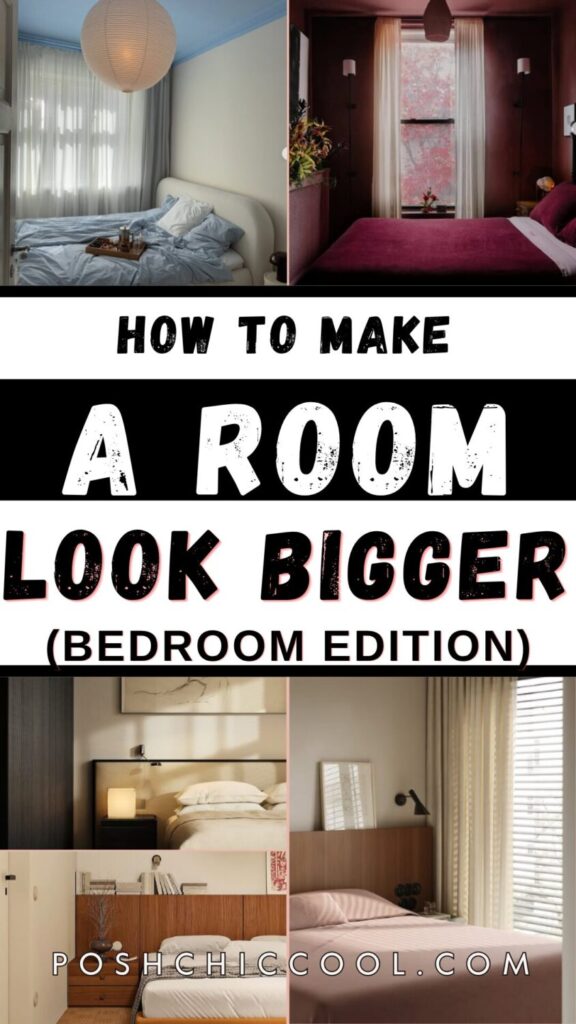
This blog post is all about how to make a small bedroom feel bigger. Don’t forget to save it to Pinterest and come back later!
Posh Chic Cool is a participant in the Amazon Services LLC Associates Program, an affiliate advertising program designed to provide a means for sites to earn advertising fees by advertising and linking to Amazon.com. As an Amazon Associate, I earn from qualifying purchases at no extra cost to you. Disclaimer, Privacy Policy and Terms and Conditions
A small bedroom can feel comfortable and inviting, but it needs a little more planning than a larger room.
Every piece of furniture, every color, and every object left on display affects how open the space feels. The goal is not to make the room look empty. It is to give your eyes places to rest and make it easier to move around.
These ideas will help you make a small bedroom feel bigger without changing the actual size of the room.
1. Start With a Cohesive Color Palette
Very often you see advice that light colors can make a small bedroom feel brighter and more open because they reflect more natural light around the room. I think white just makes the room look white.
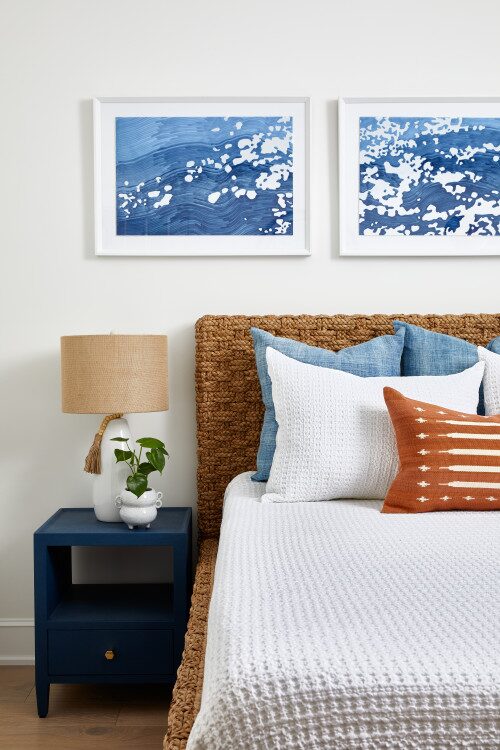
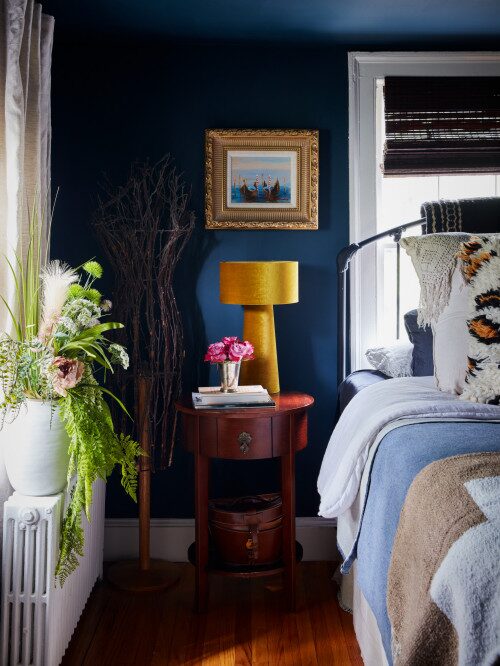
If you prefer soft whites, warm creams, pale greige, or muted pastels, definitely go ahead to create a calm background without making the bedroom feel cold or plain. However, you can absolutely double down on darker colors. The whole point is to maintain cohesiveness and a mindful color palette.
Try to keep the walls, trim, curtains, and larger pieces of furniture within a similar color family. When there are fewer sharp color changes, the eye moves around the room more easily, which can make the space feel wider.
This does not mean you have to avoid color. Add it through pillows, artwork, a throw, or one upholstered piece instead of using several competing shades across the room.
Btw, this is my favorite printed resource for color palettes! you are going to love it.


2. Choose Furniture That Fits the Room’s Scale
One of the easiest ways to make a small bedroom feel crowded is to fill it with furniture that is too large.
Before buying anything, measure the room and mark out the size of the furniture on the floor. Painter’s tape is useful for this because it shows you how much walking space will be left around the bed, dresser, and nightstands.
I like furniture with simple shapes, narrow frames, and visible legs. Being able to see more of the floor underneath a piece creates a lighter look than furniture that sits heavily against the ground.
You do not need to choose tiny furniture. The pieces simply need to suit the proportions of the room and leave enough space to move comfortably.
Back to Rule 1: you can choose furniture colors that coordinate with other items, such as the headboard.
3. Position the Bed to Improve Floor Space
The bed is usually the largest piece of furniture in a bedroom, so its position has a big effect on how the room feels.
In most small bedrooms, placing the bed against the longest clear wall creates the most balanced layout. It can also leave better space for opening doors, accessing a closet, and walking around the room.
I would avoid placing the bed where it blocks a window or interrupts the main path through the room. Even a narrow, clear walkway can make the layout feel much more comfortable.
In a very tight bedroom, pushing one side of the bed against a wall may free up useful floor space. It is not ideal for every household, but it can work well in a guest room, child’s room, or bedroom used by one person.
4. Use the Space Under the Bed for Storage
The area under the bed is too valuable to waste in a small bedroom.
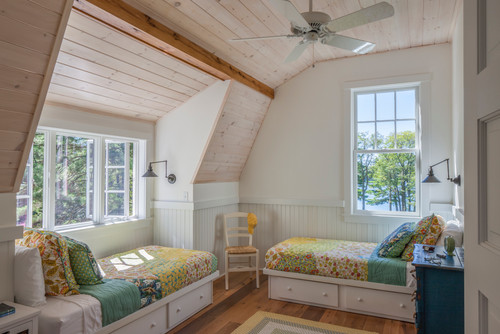
A storage bed with built-in drawers can hold spare bedding, shoes, seasonal clothes, or items you do not need every day. You can also use low storage boxes if you already have a bed with enough clearance underneath.
In built-in drawers, I prefer to organize everything in containers with lids because they keep everything protected and prevent the drawers from looking messy. Labeling each container also makes it easier to find what you need without pulling everything out.


The goal is to use hidden storage to reduce clutter, not to create another place where forgotten belongings pile up.
5. Draw the Eye Up With Vertical Details
When floor space is limited, use the height of the room.
Tall shelves, full-length curtains, vertical wall paneling, and narrow artwork can guide the eye upward. This makes the ceiling feel higher and helps the room appear less boxed in.
I like to place artwork slightly higher than expected when I want to emphasize the height of a wall. A tall headboard can create a similar effect without using extra floor space.
Keep vertical features simple and intentional. Too many tall objects around the room can make the walls feel busy instead of spacious.
6. Make Windows Look Taller and Wider
Curtains can completely change how large a window appears.
Mount the curtain rod close to the ceiling rather than directly above the window frame. Extending the rod beyond both sides of the window also allows the curtains to sit mostly against the wall when they are open.
This exposes more glass, brings in more daylight, and makes the window look wider.
I would choose curtains that reach the floor, even when the window itself is small. Lightweight fabrics work especially well because they soften the room without blocking too much natural light.
7. Replace Bulky Furniture With Wall-Mounted Pieces
Wall-mounted furniture keeps more of the floor visible, which can make a small bedroom feel lighter.
Floating nightstands are a good example. They provide a surface for a glass of water, a book, or a phone without taking up the same visual space as a traditional cabinet.
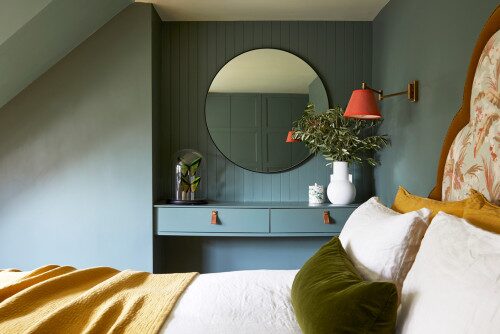
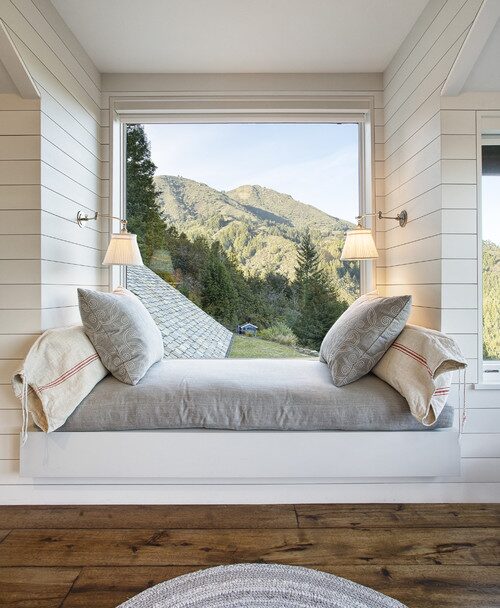
Wall sconces can replace table lamps and leave more room on narrow bedside surfaces. A floating shelf can also work as a compact desk, dressing table, or display area.
I like this approach because it adds function without filling the room with heavy furniture.
8. Layer the Lighting
A single ceiling light rarely makes a bedroom feel warm or spacious.
I prefer to use several light sources at different heights. This might include a ceiling fixture, bedside lights, and a small lamp on a dresser or shelf.
Lighting the corners of the room is especially helpful. Dark corners can visually close in a space, while soft pools of light make the full width of the room easier to see.
Choose warm, diffused lighting rather than harsh bulbs. The room will feel more comfortable, and the softer light can reduce strong shadows that make the walls feel closer.
9. Keep Surfaces Clear and Styling Simple
I believe that less is more when it comes to the amount of stuff we have visible on shelves, dressers, and nightstands.
But in a small bedroom, it matters even more.
Be intentional about the decorations and personal belongings you want to display. I like a nice-looking candle, the book I am currently reading, and a small plant.
Everything else can go inside a drawer, basket, or decorative box. Clearer surfaces give the eye a place to rest and make the bedroom feel calmer.
You do not have to remove everything that shows your personality. Choose a few pieces you genuinely enjoy instead of trying to display every decorative object at once.
10. Choose the Right Rug Size
A rug that is too small can break the floor into separate sections and make the room feel more confined.
When possible, choose a rug that extends beyond both sides of the bed and is visible at the foot. This visually connects the furniture and creates one larger, more settled area.
I would rather use one appropriately sized rug than several small rugs around the room. Too many separate floor coverings can make a compact layout feel fragmented.
A soft pattern or low-contrast color will add texture without drawing too much attention to the room’s boundaries.
11. Create One Clear Focal Point
A small bedroom feels more organized when the eye knows where to look first.
The bed is usually the easiest focal point to work with. You might use an upholstered headboard, a large piece of artwork, an interesting wall color, or a pair of matching bedside lights to frame it.
Once you have chosen the main feature, let the rest of the room support it. Avoid adding a different statement piece to every wall.
I like to repeat two or three colors or materials throughout the bedroom. This creates a pulled-together look and keeps the room from feeling visually scattered.
Small Bedroom Design Mistakes to Avoid
Try not to fill every wall with furniture. Leaving a little open wall space can make the room feel less crowded, even when storage is limited.
Avoid blocking windows with tall cabinets, shelves, or heavy curtains. Natural light is one of the best tools you have for making a small bedroom feel more open.
Be careful with open storage too. Shelves can look lovely, but they need regular editing. A combination of closed storage and a few carefully styled open areas is usually easier to maintain.
I would also avoid buying lots of very small decorative pieces. A few medium-sized items often look calmer and more intentional than a collection of tiny objects spread around the room.
Frequently Asked Questions
What color makes a small bedroom look bigger?
Soft, light colors usually make a small bedroom feel brighter and more open. Warm white, cream, pale beige, light gray, and muted blue or green can all work well.
The best color will depend on the amount of natural light in the room. Test samples on several walls and look at them during different times of the day before making a final decision.
Can I use dark colors in a small bedroom?
Yes, a small bedroom can still look beautiful with dark walls.
Deep colors can create a cozy, cocoon-like feeling, especially when they are used across the walls, trim, and ceiling. Keep the rest of the palette controlled and include enough lighting so the room does not feel flat.
Dark colors may not make the room appear physically larger, but they can make its boundaries feel softer and less obvious.
Where should the bed go in a small bedroom?
Start with the longest uninterrupted wall and check whether the position leaves a clear path to the door, windows, and closet.
The best layout will depend on the shape of the bedroom and how many people use the bed. Comfort and easy movement are more important than following one strict placement rule.
Do mirrors make a bedroom look larger?
Mirrors can make a bedroom feel larger by reflecting light and extending the view across the room.
They are most effective when they reflect a window, an attractive part of the room, or a source of soft light. Pay attention to what the mirror will show before deciding where to hang it.
How can I add storage without making the bedroom feel crowded?
Use areas that are often overlooked, such as the space under the bed, the wall above a dresser, or the back of a door.
Choose closed storage for items that are not attractive enough to display. Wall-mounted shelves, tall cabinets, and storage beds can provide useful space while keeping more of the floor clear.
Final Thoughts
You do not need a large bedroom to create a space that feels comfortable, calm, and thoughtfully designed.
Start with the biggest visual changes: choose furniture that fits, improve the layout, let in as much light as possible, and reduce the amount of clutter on display.
Then add the details that make the room feel personal.
A small bedroom may require you to be more selective, but that is often what leads to a better-designed space.
One Comment
Comments are closed.