As a third-country national, you might be considering moving to the EU.
While Western European countries might sound like an ultimate dream, there are many reasons to choose the Czech Republic instead.
As someone who has graduated in the Netherlands, worked there for a while, and then done the same in the Czech Republic, here are the top 5 reasons why I would suggest you go for the latter instead of the former.
#1. Much easier requirements for a long-term residence permit
While the statement is true, there is a caveat to it: you have graduated here.
In the Netherlands, after you graduate, you are given 1 year to stay on the basis of Zoek Jaar residence permit which is equivalent to “long term residence permit for searching for a job.
Before this residence permit expires, you need to find an employer who is capable and willing to prove that they can sponsor you. There are a lot of requirements.
While in the Czech Republic, once you graduate from Czech University, you automatically get free access to the labour market.
Even better: after graduation, you get 1 full year residence permit for the purpose of finding a job or starting a business. During this one year, you have two options: find an employer who would pay you a salary covering official living expenses, or get a trade license (OSVČ) and acquire income through solopreneurship.
After this one year residence permit expires, you can switch it to either Employee card (if you find a job) or Long term residence permit for doing business.
While both options are great, I decided to go for the latter one and have not regretted it.
The great news is that, if for some reason you have to leave Czech Republic for a year or two, you can come back anytime super easily: either find an employer, or have proof that your business income in that new country meets the requirements for business viza.
Even if you find an employer in the Czech Republic, they do not have to jump through all the hoops to get you hired – because you have free access to the labour market, they just have to give you a standard regular degular contract.
While graduating from Czech University might sound like pain in the ass, long term, it gives you great advantages.
Plus to that, if you get your masters, you also have an option, later in life, to apply for Phd.
You won’t believe – for example, in CVUT (which I did my masters at) offers phd programs for a ridiculously low fee.
And if you go for a full-time study program, you might even get paid for teaching.

I was considering it lately, but in the end, I decided to go for a phd in Georgia. I can’t bother myself anymore.
Later in life, you never know _ I might come back to Prague at some point, if I decide so.
2. Cost of living is relatively low
In later years, it’s getting worse and worse, especially in prague, but for the context, in 2017 I was paying 500Euros for a single room in Diemen and biking to Amsterdam every day.
In Prague you can rent a room in the center for around 13000-15000Czk CZK in or around the center.
At some point you might get sick of living with flatmates. I was paying 20k-22k czk (depending on actual energy costs of the month) for a studio apartment in the center.
As for regular expenses, I would say, even going out is much cheaper in Prague than in Amsterdam, let alone grocery shopping.
3. Super affordable and well-planned public transport
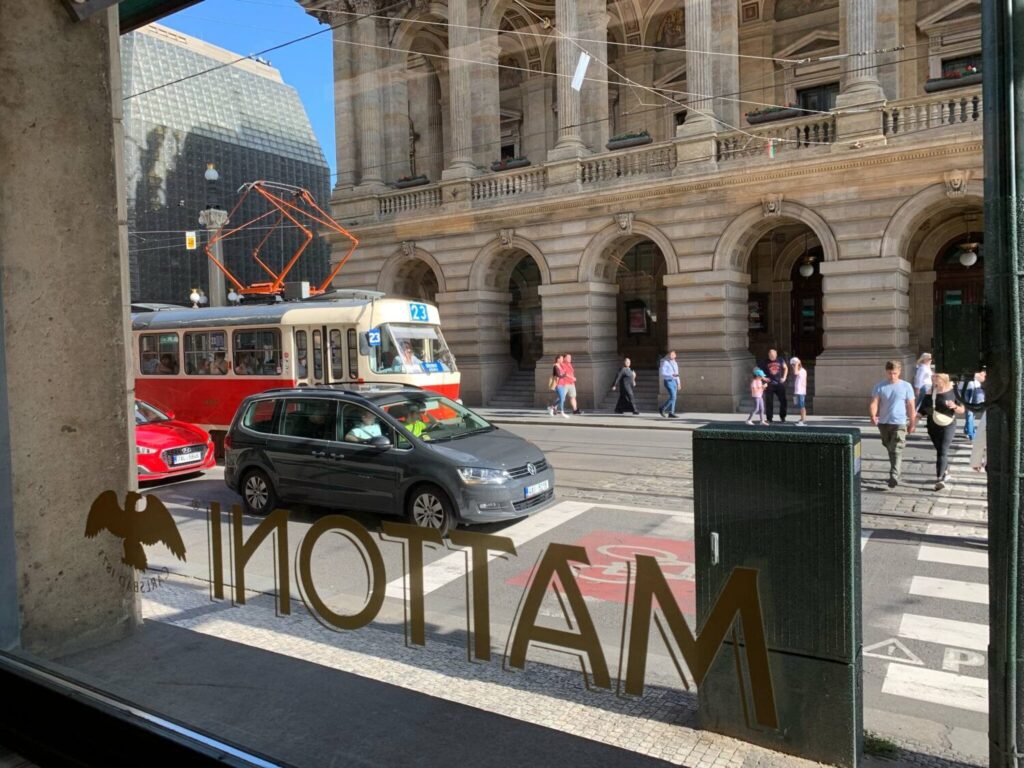
This is my favorite one: the public transport in Prague is one of the best and cheapest in Europe, I believe.
The routes are super well planned, the city is well connected, and if you are a resident here, you get a year pass (Karta Lítačka) and travel for 10czk per day as much as you want.
4. People are a bit more welcoming than in Western countries
This might be my personal experience, and it might not be true for you, but I was quite welcomed and appreciated wherever I worked, among colleagues or other acquaintances.

5. More Balanced Work-Life Culture
In the Netherlands, there’s a strong culture of part-time work and work-life balance, but the job market is more competitive, and securing stable employment as a third-country national often requires overperforming.
In Czechia, while the culture is also professional, there’s often less pressure to be “perfect” and more appreciation of loyalty and effort.
In many workplaces, the expectations are reasonable, and you’re more likely to find understanding managers and a less stressful day-to-day atmosphere, especially in smaller companies or startups.
Conclusion
At the end of the day, your choice of where to settle in Europe as a third-country national will depend on your personal goals, lifestyle preferences, and long-term plans.
But if you’re looking for a place that offers more accessible residence options, lower living costs, a solid public transport system, and a welcoming work environmentm, the Czech Republic has a lot to offer.
Having lived and worked in both the Netherlands and Czechia, I can say that while the Netherlands has its perks, the Czech Republic gave me more freedom, flexibility, and peace of mind when building my life after graduation.
Whether you’re planning to launch a career, start a business, or simply enjoy life in Europe, Czechia might just be the better choice. and one that’s often overlooked.