Mid century modern living rooms can sometimes get reduced to the same formula: walnut furniture, tapered legs, a starburst light, done.
But the rooms I’m drawn to most take those familiar elements and do something a little more personal with them. Think wood paneling paired with unexpected color, classic lounge chairs mixed with traditional pieces, oversized art, built-in shelving, and layouts that actually respond to the architecture.
Some of these spaces lean warm and earthy, others are bright, colorful, or surprisingly minimal. These 25 mid century modern living room ideas show just how flexible the style can be—and hopefully give you a few ideas worth borrowing for your own space.
Use Symmetry, Then Break It With Color

Photo by Fiddlehead Design Group, LLC – Discover living room design ideas
There’s something satisfying about a living room that feels balanced, and this one gets that mix right. The matching sofas, side tables, and artwork create a clear sense of symmetry around the fireplace, but the color keeps the arrangement from feeling too predictable.
Deep blue walls, a teal ottoman, and those small hits of rust bring in enough contrast to loosen everything up. The warm wood above the fireplace helps bridge the brighter colors with the more classic mid century palette. If you like a tidy, structured layout, this is a good reminder that symmetry doesn’t have to mean playing it safe. Keep the larger furniture balanced, then use pillows, an ottoman, or a strong wall color to add the personality.
Mustard Yellow to Warm Up a Wood-Paneled Room
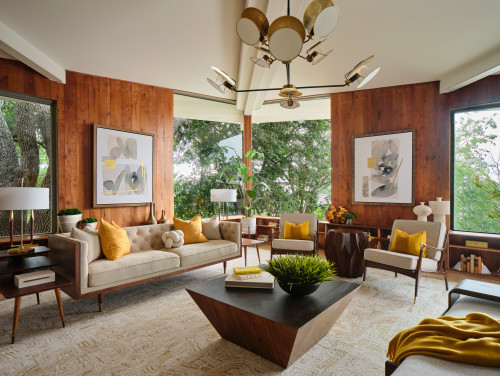
Photo by Haven Design and Construction – Discover living room design ideas
Mustard yellow is doing a lot of quiet work in this room. Against the rich wood walls and soft neutral seating, those golden accents keep the palette from feeling too brown or too safe. The color shows up in just a few places, but that repetition is enough to make the whole space feel more considered and a little more alive.
It also fits the mid century mood beautifully—warm, slightly retro, but still easy to live with. If you like wood paneling but worry it can read heavy, this is a smart fix: bring in one earthy accent color through pillows, a throw, or a chair and let it lift the room without overwhelming it.
Use Bookshelves to Divide an Open-Plan Living Space

Photo by Tom Hurt Architecture – More living room photos
Guess what. A room divider doesn’t have to be a wall. Here, tall bookshelves carve out separate zones while still allowing the space to feel connected, and because they’re filled with books and objects, they bring personality along with the function.
This is especially useful in a larger mid century modern living room where one open space needs to handle several activities. Instead of adding a solid partition, a shelving unit can define the living area, create storage, and make the floor plan feel more intentional all at once.
Keep the Furniture Low and Let the View Take Over

Photo by Chris Cobb Architecture – Discover living room design inspiration
When a room has windows like these, the furniture really doesn’t need to compete for attention. The low-profile seating keeps the sightlines open, so the trees and natural light become part of the room rather than something happening behind it.
Slim legs and compact silhouettes also help the space feel lighter, even with several seating and dining pieces sharing the same open layout.
I like that the mid century modern character comes through in the shapes and proportions instead of relying on lots of themed decor. If you have large windows at home, look for sofas, lounge chairs, and tables that sit lower and leave as much glass exposed as possible. It’s a simple layout choice, but it can make the whole living room feel more spacious and connected to the outdoors.
Architectural feature: wood panelling

Photo by building Lab, inc. – Search living room pictures
In an open-plan room, one strong architectural feature can do a lot of the zoning for you. Here, the full-height wood-clad wall gives the living area a clear visual anchor, while the white kitchen stays lighter and more recessive beside it.
The built-in shelving keeps the wall useful rather than purely decorative, and the warm wood tone carries through to the floor and furniture for a more connected look.
I also like how the ceiling line and lighting help each area feel distinct without adding physical barriers. If your living room shares space with a kitchen or dining area, consider concentrating a richer material on one wall instead of spreading it everywhere. It can give the room more structure while keeping the overall layout open and easy to move through.
Use a Statement Light to Break Up All That Wood

Photo by – Browse living room photos
With so much warm wood running across the wall, the room could easily start to feel a little heavy. The sculptural ceiling light changes that immediately, adding a bright, airy shape that pulls the eye upward and gives the space some breathing room.
Its radiating arms also bring in that unmistakable mid century energy. I like the contrast with the deep blue sectional too: the room has plenty of saturated color, but the metallic fixture keeps the whole palette from feeling too grounded.
Oversized Abstract Art To Add Personality

Photo by Chris Nguyen, Analog|Dialog – Look for living room design inspiration
Mid century furniture already gives a room plenty of shape, but bold artwork can stop the look from feeling too period-specific. In this space, the slim-legged sideboard, woven chairs, and low green sofa bring in the classic silhouettes, while the oversized abstract pieces add a much more expressive layer.
The colors in the art also echo through the rug, cushions, and upholstery, which helps the mix feel intentional rather than random. What works especially well is the contrast in scale: the furniture stays relatively light and low, while the artwork takes up serious visual space on the walls. If your room is starting to feel a little too vintage, try adding one large contemporary piece instead of more mid century decor.
Use Matching Lounge Chairs to Create an Easy Conversation Area

Photo by rho architects – Discover living room design ideas
A pair of matching lounge chairs is an easy way to make a seating area feel more social. Here, they sit across from the sofa at a slight angle, creating a loose circle around the coffee table rather than lining everything up against the walls. The open wood frames keep the chairs visually light, which matters in a room with a darker, more substantial sofa. There’s also enough space between the pieces for the layout to feel relaxed rather than crowded.
Keep a Bright Living Room Grounded With Warm Wood Tones

Photo by Lord Design – More living room ideas
This room gets a lot of mileage out of contrast. The white ceiling, pale walls, and built-ins keep everything feeling bright, but the warm wood floor, coffee table, side table, and lounge chairs stop the space from drifting into all-white territory. Those richer tones give the eye somewhere to land and make the room feel more settled without taking away from the light.
I especially like that the wood isn’t perfectly matched—there’s enough variation to make the room feel collected rather than overly coordinated. In a bright mid century modern living room, that balance is worth remembering: keep the larger surfaces light, then use natural wood in a few substantial pieces to add warmth, depth, and a little more character.
Use a Mid Century Living Room Console to Define the Back of the Sofa

Photo by Balodemas Architects – More living room photos
That console behind the sofa is doing more than filling an empty spot. It gives the seating area a clear edge, so the living room feels defined even though the floor plan stays open.
The warm wood also ties in naturally with the built-in storage and window trim, which helps the whole space feel connected. Because the console is low and relatively slim, it doesn’t block the view or interrupt circulation around the sofa.
This is a useful move in an open-plan room where a floating sofa can otherwise feel a little stranded. Add a console behind it, and suddenly you have a stronger layout plus an extra surface for books, lighting, or a few well-chosen objects.
Mix Mid Century Shapes With More Traditional Pieces

Photo by Design Manifest – Browse living room photos
Mid century modern gets a lot more interesting when every piece in the room isn’t trying to match. The low leather chairs and slim-legged coffee table bring in those clean, recognizable mid century shapes, while the framed artwork, patterned rug, and tailored sofa push the room in a more traditional direction.
That mix keeps the space from reading like a time capsule. The rug does a lot of the work here, pulling the warmer wood and leather tones together while adding enough color to make the seating area feel layered.
If you already own more classic furniture, you don’t need to replace it all to get a mid century look. Add one or two pieces with lighter lines and tapered legs, then let the older elements stay part of the story.
Use a Bay Window to Frame the Seating Area in Mid Century modern Living Room

Photo by Nanette Wong – Discover living room design ideas
If you are lucky enough to have a bay window, make sure to use it properly.
The bay window is doing half the decorating here. By tucking the sofa right into that architectural nook, the seating area immediately feels defined without needing a larger rug, extra furniture, or any kind of divider. Keeping the sofa low was a smart move too, since it preserves the light and doesn’t interrupt the run of windows behind it.
Then there’s that orange chair, which gives the whole setup a little jolt of 1960s color without taking over. In a smaller living room, this kind of arrangement is worth stealing: let the architecture decide where the main furniture goes, then keep everything around it relatively light and unfussy.

Photo by JMorris Design LLC – Browse living room photos
Break Up Wood Paneling With a Cool Blue Sofa

Photo by BLAINE architects – Look for living room pictures
Wood paneling brings instant warmth, but too much of the same tone can start to flatten a room. The blue sectional gives this space exactly the contrast it needs, cooling down the walls without fighting their natural richness. Because the upholstery is soft and muted rather than overly bright, it still sits comfortably with the walnut tones and woven wood chairs.
The black ceiling beams sharpen the whole palette and keep the room from drifting too retro. This is a smart color move to borrow if you already have a lot of brown in your living room: instead of adding more warm neutrals, bring in a cooler shade through one substantial piece of furniture. It gives the wood more presence, not less.
Pair Wood Paneling With Playful, Saturated Color in Mid Century Modern Living Room

Photo by Fritz Johnson AIA – Look for living room design inspiration
This room leans into its wood paneling instead of trying to tone it down, and the brighter color choices make that warmth feel much more playful. The red and aqua pillows wake up the neutral sofa, while the vivid kitchen beyond keeps the eye moving through the open space. Even the artwork joins in, adding another hit of saturated color without making the living area feel overstyled.
What makes the mix work is restraint: the larger pieces stay fairly simple, so the stronger shades can have a little fun. For a similar effect, keep the wood as your grounding element and bring in two or three confident accent colors through textiles, art, or a nearby room.
Use Open Shelving as Part of the Architecture

Photo by MICHAEL HENNESSEY ARCHITECTURE – Browse living room ideas
The shelving here feels less like furniture and more like part of the room itself, which is exactly why it works so well. Spanning almost the full wall, it gives books, art, and smaller objects a place to live without adding another bulky cabinet to the layout. The open construction also lets the wall breathe, so even a fairly full display doesn’t feel too heavy.
Against the strong ceiling beams and fireplace surround, those slim horizontal shelves add a lighter, more relaxed counterpoint. If you’re planning storage in a mid century modern living room, this is a good case for going wide rather than deep. A long run of shallow open shelving can add function, personality, and a built-in feel without crowding the seating area.
Build a Mid Century Living Room Around the View

Photo by Acorn Deck House Company – Discover living room design inspiration
When the scenery is this good, the room can afford to be quieter. The seating stays low and relatively open, which keeps the long run of windows clear and lets the forest become the strongest visual element in the space.
Warm wood overhead, the stone fireplace, and the earthy upholstery all echo colors already happening outside, so the transition from indoors to out feels especially natural. Even the furniture placement seems to respect the view rather than turning away from it. The result feels unmistakably mid century, but also very grounded in its setting.
Use Built-Ins to Frame the Fireplace and Let colorful furniture piece Wake Up the Whole Room

Photo by Martin Cox Photography – Browse living room ideas
The orange sofa is the first thing your eye lands on, and honestly, that’s exactly what this room needed. Without it, the built-ins, fireplace, and classic wood furniture would still be beautiful, but the space would read much quieter. Instead, that one saturated piece shakes up the palette and gives the whole living room a little spark.
The built-ins on either side of the fireplace keep everything feeling grounded and orderly, which makes the stronger color feel intentional rather than loud.
I also like the contrast between the vivid sofa and the darker lounge chair and ottoman—it keeps the room from slipping into matchy-matchy territory. If your living room already has great architectural bones or built-in storage, a single colorful sofa or accent chair can be enough to wake everything up.
Conclusion
The common thread through all of these rooms isn’t a particular chair, wood species, or color palette. It’s the way each space uses mid century design as a starting point rather than a rulebook. A bold sofa can sit beside wood paneling, a vintage rug can soften cleaner furniture, and contemporary artwork can make classic pieces feel completely different. If you’re working on your own mid century modern living room, start with one idea that solves something your room actually needs—better seating, stronger color, more storage, or a clearer layout. Then build from there. A little restraint mixed with a few unexpected choices is usually where the personality comes in.

One Comment
Comments are closed.