Living with rheumatoid arthritis makes inflammation feel very concrete. It appears as morning stiffness, swollen or uncomfortable joints, fatigue, and days when ordinary movement feels harder than it should.
That is why I became interested in turmeric.
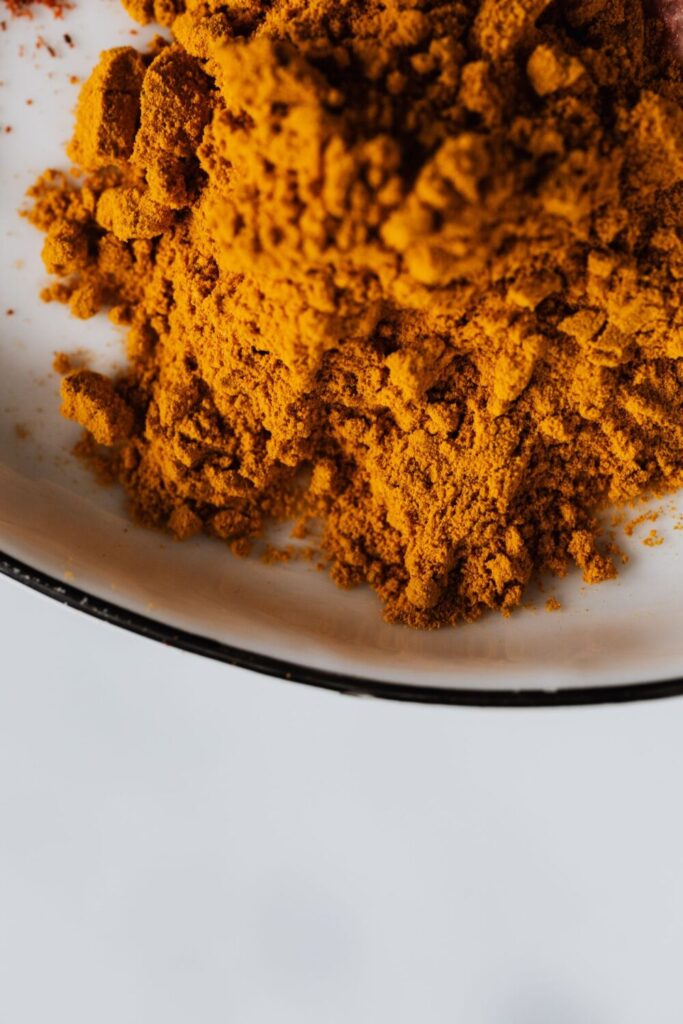
Curcumin, one of turmeric’s principal active compounds, is frequently described as having anti-inflammatory and antioxidant properties. Like many people, I kept encountering the same advice: turmeric is poorly absorbed, so take it with black pepper.
I followed that advice. I chose a curcumin supplement containing piperine and took it consistently, expecting gradual improvements in stiffness, joint discomfort, or energy.
I did notice some effect, but it was not life-changing.
At first, I assumed turmeric simply did not work that well for me. But after looking more closely, I realised that I had been treating every turmeric product as though it delivered curcumin in roughly the same way.
Turns out, the form may matter as much as the dose.
You might also like:
Rheumatoid Arthritis Journey: Meds, treatments and things that helped me get better
Posh Chic Cool is a participant in the Amazon Services LLC Associates Program, an affiliate advertising program designed to provide a means for sites to earn advertising fees by advertising and linking to Amazon.com. As an Amazon Associate, I earn from qualifying purchases at no extra cost to you. Disclaimer, Privacy Policy and Terms and Conditions
Turmeric, Curcumin, and the Absorption Problem
Turmeric is the whole root or spice. Curcumin is one of the active compounds found within it. A teaspoon of turmeric powder, a turmeric-root capsule, and a concentrated curcumin extract therefore do not provide equivalent amounts of curcuminoids.
Even concentrated curcumin presents another problem: poor bioavailability.
Holistic doctor Dr. Sten Ekberg describes three separate stages:
- Curcumin enters the digestive tract.
- Some crosses the intestinal wall into the bloodstream.
- A smaller amount remains available to reach tissues and cells.
According to his explanation, less than 1% of ordinary turmeric or curcumin may reach the bloodstream, while less than 0.1% may reach cells. He attributes this partly to poor intestinal absorption and partly to rapid processing by the intestinal wall and liver.
This distinction changed the question for me. Instead of asking how much curcumin a product contains, I began asking how much the formulation might actually deliver.
Comparing the Main Forms
The two sources I reviewed use different measurements, so their figures cannot be compared as though they came from one head-to-head study.
Dr. Ekberg gives approximate percentages for plain, piperine-enhanced, and fenugreek-bound curcumin. Yaseen Arsalan, PharmD., describes curcumin phytosome using a relative figure: 29 times greater absorption than curcumin alone.
| Form | Absorption claim in the sources | Main advantage | Main limitation |
|---|---|---|---|
| Plain turmeric or curcumin | Less than 1% reaching blood; less than 0.1% reaching cells | Affordable; may still act locally in the gut | Very low systemic availability |
| Curcumin with piperine | Approximately 5–8% reaching blood | May improve intestinal uptake and slow breakdown | Much may still be rapidly processed; may cause heartburn |
| Curcumin with dietary fat | No precise percentage given | Fat may support dissolution and absorption | Fat alone may not prevent rapid metabolism |
| Fenugreek-bound curcumin | Approximately 15–30% reaching blood; 25–40 times greater cellular delivery claimed | Slow release and sustained exposure | Figures come from Dr. Ekberg’s presentation and should be interpreted cautiously |
| Curcumin phytosome | Reported as 29 times more absorbable than plain curcumin | Phospholipids may improve transport and retention | No absolute percentage or direct comparison with fenugreek curcumin |
The overall pattern is clearer than the precise ranking: specialised delivery systems appear more promising for systemic absorption than turmeric powder, plain curcumin, or piperine alone.
Option One: Culinary Turmeric
I originally assumed that using turmeric generously in food would provide the same anti-inflammatory compounds as a supplement, only in a more natural form.
The main limitation is that most ordinary turmeric appears to remain in the digestive tract rather than entering circulation.
That does not necessarily make it useless.
Dr. Ekberg argues that turmeric remaining in the gut may support beneficial bacteria, help control undesirable bacteria, strengthen the intestinal barrier, reduce local gut inflammation, support bile flow, and assist fat digestion.
These possible effects may make turmeric worthwhile as part of a varied diet. However, the source does not show that culinary turmeric alone can control rheumatoid arthritis activity, reduce flares, or protect joints.
I would therefore view turmeric in food as a useful culinary and potentially gut-supportive ingredient—not as equivalent to a concentrated, enhanced-delivery curcumin supplement.
Option Two: Plain Curcumin Capsules
A capsule containing 500 or 1,000 milligrams of curcumin looks considerably stronger than a teaspoon of turmeric.
It is certainly more concentrated. But concentration does not automatically solve bioavailability.
The milligram number on the label describes how much curcumin is swallowed. It does not reveal how much crosses the intestine, survives metabolism, remains in circulation, or reaches tissues.
A high-dose plain-curcumin product may therefore provide less systemic exposure than a smaller dose using an effective delivery system.
This does not mean that every enhanced formulation is automatically superior. It means that supplements should be compared by formulation and delivered exposure, not only by the largest number on the bottle.
Option Three: Curcumin With Piperine
Piperine was the formulation I tried first because black pepper is so widely presented as the standard absorption enhancer.
Yaseen Arsalan, PharmD., describes two proposed mechanisms:
- Piperine may help curcumin cross the intestinal wall.
- It may slow the liver’s breakdown of curcumin.
Dr. Ekberg estimates that piperine may raise absorption into the bloodstream from about 1% to approximately 5–8%. However, he argues that much of the absorbed curcumin may still be processed before reaching cells.
That could partly explain why my own supplement produced less noticeable improvement than I expected.
Dr. Ekberg also raises concerns that piperine may increase absorption partly by altering intestinal permeability. Because rheumatoid arthritis is autoimmune, this caught my attention. However, the source does not establish that ordinary supplemental piperine worsens rheumatoid arthritis, so I would treat this as a question requiring caution rather than a settled conclusion.
My takeaway is that piperine may improve absorption compared with plain curcumin, but it may not solve every stage of the delivery problem.
Option Four: Taking Curcumin With Fat
Because curcumin is fat-soluble, I also wondered whether I had been taking it with the wrong meals.
Yaseen Arsalan recommends consuming curcumin with a source of dietary fat and refers to approximately 15 grams as a potentially useful amount. This could come from foods such as avocado, olive oil, full-fat yoghurt, nuts, seeds, eggs, or a substantial balanced meal.
Fat may help curcumin dissolve more effectively and support intestinal uptake. For that reason, taking curcumin with a meal seems more rational than taking it with water on an empty stomach.
However, neither source provides a precise absorption percentage for this method. Dietary fat may improve digestive conditions without necessarily preventing rapid processing afterward.
I would treat fat as a practical absorption aid, not as a complete delivery system.
Option Five: Fenugreek-Bound Curcumin
Fenugreek-bound curcumin was the formulation I had not previously encountered.
Dr. Ekberg describes soluble fenugreek fibre forming a colloidal, gel-like structure around curcumin. This is said to make the complex more water-compatible and create slower release in the intestine.
The proposed advantage is sustained exposure rather than one brief absorption peak.
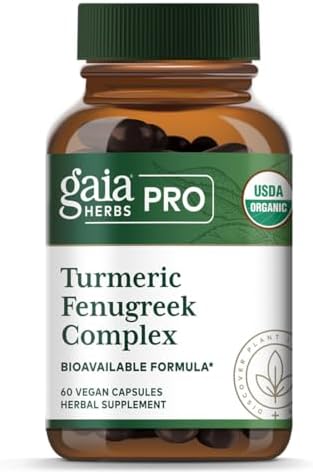
- Daily Dietary Supplement: Gaia Herbs PRO Turmeric Fenugreek Complex is an adult health supplement with organic turmeric …
- Support Healthy Lifestyle: These daily dietary supplements are made with more bioavailable form of turmeric with curcumi…
- USDA Organic: This herbal nutrient complex is a natural wellness formula made with USDA Organic turmeric with curcuminoi…
- About 1% of plain curcumin reaches the bloodstream.
- About 5–8% reaches it when combined with pepper.
- About 15–30% reaches it in a fenugreek complex.
- Cellular delivery may be 25–40 times greater than with ordinary formulations.
These are claims presented in his explanation and should not be treated as guaranteed absorption rates for every product or person.
Still, the slow-release concept interested me. Rheumatoid arthritis is chronic, so a formulation intended to maintain exposure over time appears more relevant than one creating only a short-lived rise in curcumin levels.
There is also an important limitation: Dr. Ekberg recommends a specific commercial product. His interpretation may therefore not be completely neutral, and not every supplement containing curcumin and fenugreek should be assumed to perform identically.
I would assess the formulation category rather than endorse one brand based on this source alone.
Option Six: Curcumin Phytosome
Curcumin phytosome uses phospholipids—fat-like components also found in cell membranes—to carry curcumin.
This may help curcumin mix more effectively with biological membranes, reach circulation more efficiently, and remain available longer than plain curcumin.
this is the product I am testing and will report back.
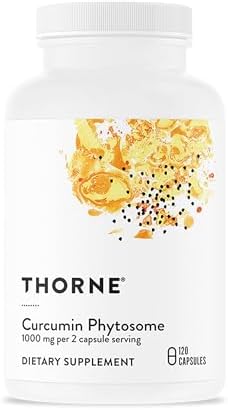
- Mobility: Reduces joint stiffness*
- Comfort: Promotes flexibility by providing relief from minor aches and muscle soreness*
- Healthy Response: Helps maintain a healthy response in the joints, muscles, GI tract, liver, brain, eyes, and nerves*
Yaseen Arsalan describes curcumin phytosome as providing 29 times greater absorption than curcumin alone.
At first glance, that sounds like an obvious winner.
But “29 times greater absorption” does not mean that 29% of the dose is absorbed. It also does not prove that phytosome curcumin reaches cells 29 times more effectively, provides 29 times greater symptom relief, or outperforms fenugreek-bound curcumin.
Different studies may measure:
- Free curcumin
- Curcumin metabolites
- Peak blood concentration
- Total exposure over several hours
- Different doses and formulations
Because the fenugreek source gives estimated percentages while the phytosome source gives a relative multiple, the two cannot be ranked directly.
Phytosome curcumin still appears to be a strong piperine-free option. But the supplied evidence does not establish whether it is superior to fenugreek-bound curcumin.
Which Form Appears Most Absorbable?
Based on the two sources, the forms can be grouped broadly:
Lowest expected systemic absorption
- Culinary turmeric
- Plain turmeric capsules
- Plain curcumin extracts
Moderate improvement
- Curcumin with piperine
- Curcumin taken with dietary fat
Enhanced-delivery formulations
- Fenugreek colloidal curcumin
- Curcumin phytosome
The enhanced formulations appear most promising for systemic exposure. However, the sources do not provide a valid direct comparison between phytosome and fenugreek-bound curcumin.
Absorption Is Not the Same as Rheumatoid Arthritis Relief
This may be the most important qualification.
Improved absorption does not automatically guarantee less joint swelling, shorter morning stiffness, lower inflammatory markers, fewer flares, reduced medication requirements, prevention of joint damage.
Three different concepts need to be separated:
Bioavailability describes how much reaches circulation.
Biological activity describes whether the absorbed compound interacts with inflammatory or antioxidant pathways.
Clinical effectiveness describes whether symptoms or disease outcomes actually improve.
My mistake was assuming that a more absorbable supplement would automatically produce a noticeable result. Better delivery may improve the possibility of an effect, but it does not guarantee that the effect will be large enough for me to feel.
This exactly where own testing and experimenting comes in. There is no one size fits all. If I want to know if a thing works or not, then the best way to figure it out is to test it for certain amount of time.
Here is the product I am starting with:
- Mobility: Reduces joint stiffness*
- Comfort: Promotes flexibility by providing relief from minor aches and muscle soreness*
- Healthy Response: Helps maintain a healthy response in the joints, muscles, GI tract, liver, brain, eyes, and nerves*
How Long Should Curcumin Be Tested?
Yaseen Arsalan advises against judging curcumin like a fast-acting painkiller.
He suggests that visible improvement in chronic conditions may begin after approximately four to six weeks and may sometimes take two to three months. He also discusses BDNF studies lasting approximately eight to twelve weeks.
For rheumatoid arthritis, I would track morning stiffness duration, joint pain and swelling, fatigue, digestive symptoms, sleep quality, frequency of flares, medication or lifestyle changes.
Currently I only have 4 problematic finger joints left, the rest of the joints that were affected, has been resolved. So my main goal is to achieve solution of these 4 joints as well and live happily ever after.
Rheumatoid arthritis naturally fluctuates. Without tracking these variables, it is easy to attribute a good or bad week to the supplement when another factor may be responsible.
I would also change only one major variable at a time. Otherwise, it becomes impossible to interpret the result.
What I Would Look for in a Supplement Now
I would no longer choose a curcumin supplement simply because the label says “high strength” or displays a large milligram number.
I would look for a clearly identified delivery system, standardised curcuminoid content, the active dose per serving, yhe amount of piperine, when included, specific phytosome, phospholipid, or fenugreek-complex information, evidence relating to the exact formulation, independent quality testing, transparent ingredient sourcing, screening for contaminants, clear instructions about taking it with food.
Yaseen Arsalan specifically emphasises third-party testing and mentions previous concerns involving lead contamination in turmeric products. lead contamination has been an issue with spices in my country (Georgia) as well, so being mindful and checking the sources is super important.
Safety Considerations
Curcumin should not replace prescribed rheumatoid arthritis treatment. I am not going to stop taking my DMARD (leflunomide), neiher should you.
Disease-modifying medication is intended to control the disease process and protect joints. Curcumin should be considered a complementary intervention.
Yaseen Arsalan notes that higher doses may cause nausea, diarrhoea, or other digestive symptoms. He describes approximately 500–1,000 milligrams daily as a general range for plain curcumin, while cautioning against exceeding it without professional advice.
Enhanced formulations cannot necessarily be compared milligram for milligram with plain curcumin.
He also raises a concern that curcumin may bind iron, which could matter for someone with low iron status.
“Natural” does not automatically mean clinically irrelevant or beneficial. There are natural things that can deffinitely harm you. Think of Cyanide, for example.
A supplement may still affect digestion, nutrient availability, medication metabolism, or bleeding risk. I would discuss the exact formulation with a rheumatologist, doctor, or pharmacist before adding it to an existing treatment plan.
My Conclusion
I began this investigation because curcumin with piperine had not done much for me. My first assumption was that turmeric simply did not work.
My conclusion is now more nuanced.
I would continue using turmeric in cooking for its flavour and possible gut-related benefits, but I would not treat it as equivalent to a therapeutic curcumin formulation.
If I tested curcumin again, I would:
- Take it with a meal containing dietary fat.
- Look beyond piperine.
- Consider a phytosome or fenugreek-bound formulation.
- Judge products by delivery system and quality, not only milligrams.
- Track symptoms for several weeks.
- Change only one major variable at a time.
- Discuss the formulation alongside my medication with a healthcare professional.
Based on this logic, currently I am testing this product, and after several months I am going to move to the one with Fenugreek, so wait for the update.
- Mobility: Reduces joint stiffness*
- Comfort: Promotes flexibility by providing relief from minor aches and muscle soreness*
- Healthy Response: Helps maintain a healthy response in the joints, muscles, GI tract, liver, brain, eyes, and nerves*
- Daily Dietary Supplement: Gaia Herbs PRO Turmeric Fenugreek Complex is an adult health supplement with organic turmeric …
- Support Healthy Lifestyle: These daily dietary supplements are made with more bioavailable form of turmeric with curcumi…
- USDA Organic: This herbal nutrient complex is a natural wellness formula made with USDA Organic turmeric with curcuminoi…
The most important thing I learned was that the best way to consume turmeric may not be about taking more of it. It may be about choosing a form that gives the curcumin a realistic chance of reaching the places where it could matter.
Some studies I found interesting:
Some reddit threads I found interesting: